The cover material is one of the earliest things a reader touches and one of the last specifications many buyers finalize. That order should be reversed.
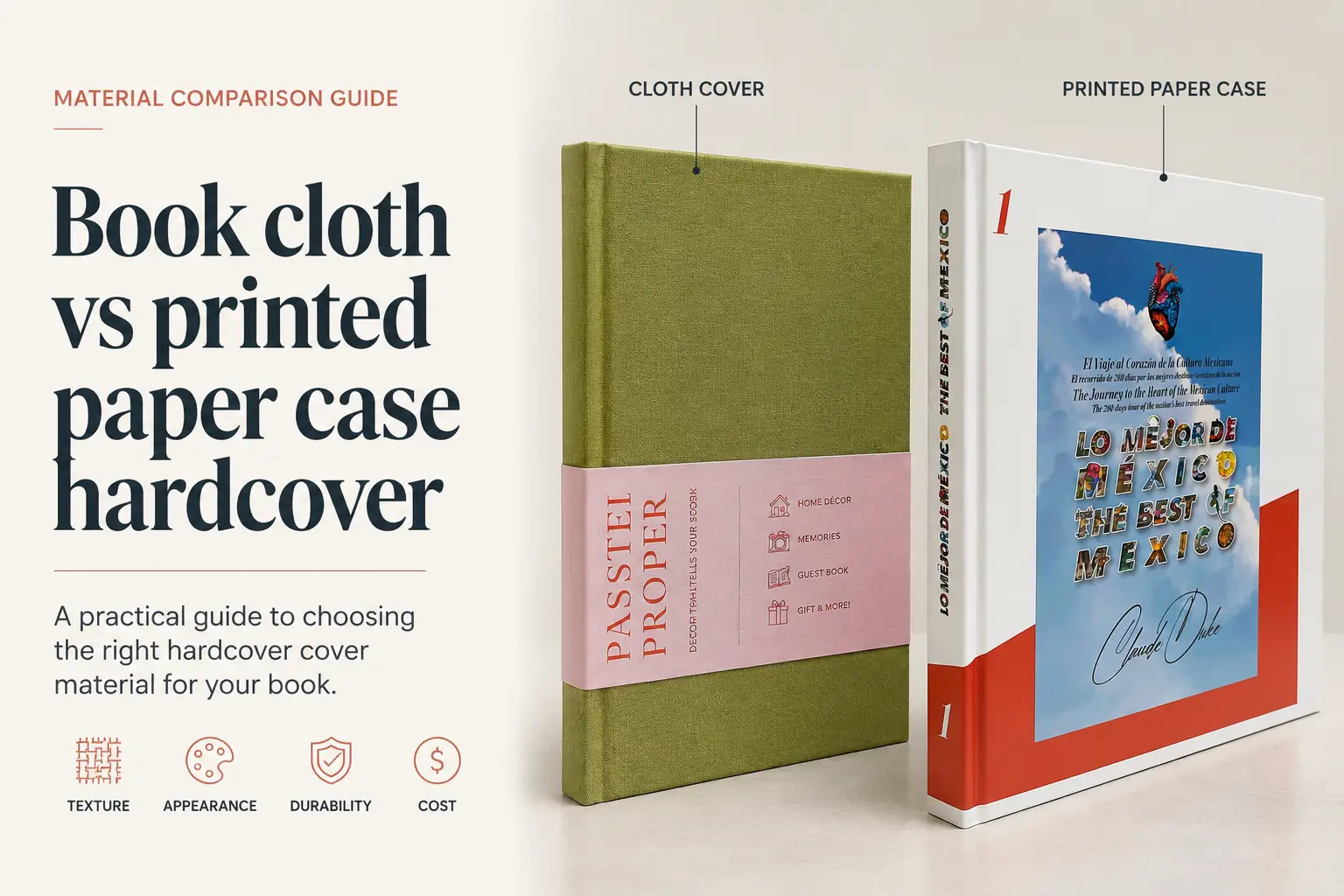
Book cloth and printed paper over board can use the same rigid casebound structure, yet they communicate very different things. Cloth gives the book a textile surface, restrained color and strong tactile identity. A printed paper case gives the designer a full CMYK canvas for illustration, photography and detailed typography. Neither is automatically more premium, more durable or more economical in every project.
The useful comparison is not simply cloth versus paper. It is the complete manufacturing system: covering material, board, adhesive, artwork, surface finish, binding, quantity, packing and intended use.
Table of Contents
Book Cloth vs Paper Case Hardcover: Quick Comparison
| Decision point | Book cloth over board | Printed paper over board |
|---|---|---|
| Visual strength | Texture, restrained typography, material color and tactile identity | Photography, illustration, gradients, detailed type and full-cover graphics |
| Common decoration | Foil stamping, blind debossing, embossing, screen printing and labels | CMYK or Pantone print, lamination, foil, embossing, debossing and spot UV |
| Color control | Cloth is selected from a swatch range; custom dyeing may require higher volume and tolerance | Printed color can be proofed, but paper, ink, coating and lamination affect the result |
| Fine image reproduction | Limited unless using a printable cloth or mounted label | Strongest option for detailed images and complex artwork |
| Surface character | Textile weave is visible and can vary by material | Smooth, textured or uncoated paper character; usually more graphic than textile |
| Wear behavior | Depends heavily on weave, coating and color; some cloth marks or frays | Lamination can improve scuff and moisture resistance; exposed corners remain vulnerable |
| Typical cost pattern | Specialty cloth and separate decoration can add material and setup cost | Often efficient for full-color runs because print and artwork share one covering sheet |
| Best fit | Literary editions, brand histories, limited editions, premium journals and tactile gift books | Art books, children’s books, photography, cookbooks, graphic novels and illustrated trade hardcovers |
Choose cloth when material presence and restrained decoration are central to the edition. Choose a printed case when the cover must carry complex visual information. When both needs matter, combine cloth with a printed dust jacket, belly band, tipped-on label or slipcase rather than forcing one surface to perform every job.
What Do “Book Cloth” and “Printed Paper Case” Actually Mean?
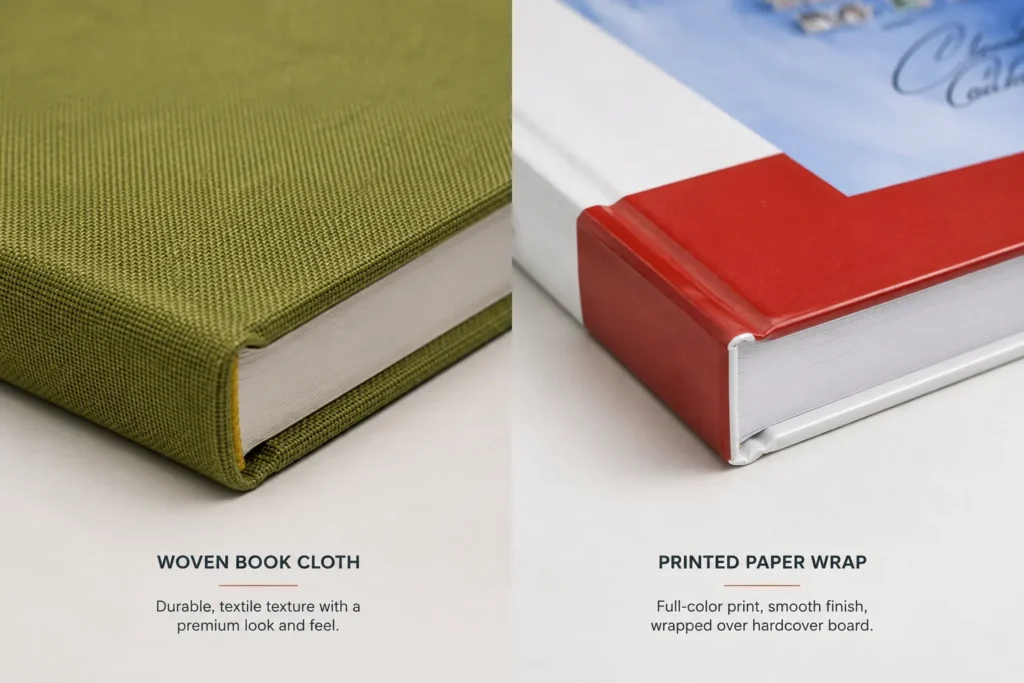
Both formats are usually casebound hardcovers. The case is manufactured separately from the book block using front and back boards, a spine piece and an outer covering material. The finished book block is then attached to the case through the endpapers. The Chicago Manual of Style’s production overview likewise describes hardcover cases as boards covered with materials such as cloth, synthetic fabric, leather or paper.
Book cloth over board
Book cloth is not simply apparel fabric glued to board. Cornell University’s preservation glossary defines it as a sized and coated textile specially prepared for bookbinding. Backing, filling or surface treatment helps control adhesive penetration, fraying, moisture response and decoration.
Commercial choices may include:
- Linen-look or natural woven cloth
- Cotton or blended book cloth
- Rayon or synthetic cloth
- Acrylic-coated or impregnated cloth
- Paper-backed cloth for stable machine wrapping
- Printable cloth designed for screen, inkjet or other specified processes
- PU or other cloth-look cover materials
Those names are not interchangeable specifications. Two materials described as “linen” may differ in weave depth, backing, coating, color consistency, foil release and resistance to rubbing. The exact supplier code and approved swatch matter more than the generic label.
PrintPack360’s cloth-bound Smyth-sewn hardcover shows the typical system: cloth mounted over rigid greyboard, sewn binding, foil or blind debossing, printed endpapers and an optional belly band.
Printed paper over board
A printed paper case, often called paper over board, uses a printed sheet wrapped and glued over the case boards. Depending on the design and production route, the sheet may be coated, uncoated, textured or laminated.
It supports:
- Full-cover CMYK illustration or photography
- Pantone spot colors
- Fine typography and small graphic elements
- Matte, gloss, soft-touch or anti-scratch lamination
- Foil stamping, embossing, debossing and spot UV
- Different artwork across the front, spine and back
“Printed case” describes the outer covering, not the binding quality. It can still use thick board, sewn sections, high-grade endpapers and precise case making. A well-engineered printed case can feel more resolved than an expensive cloth chosen without regard to the artwork.
Hybrid constructions

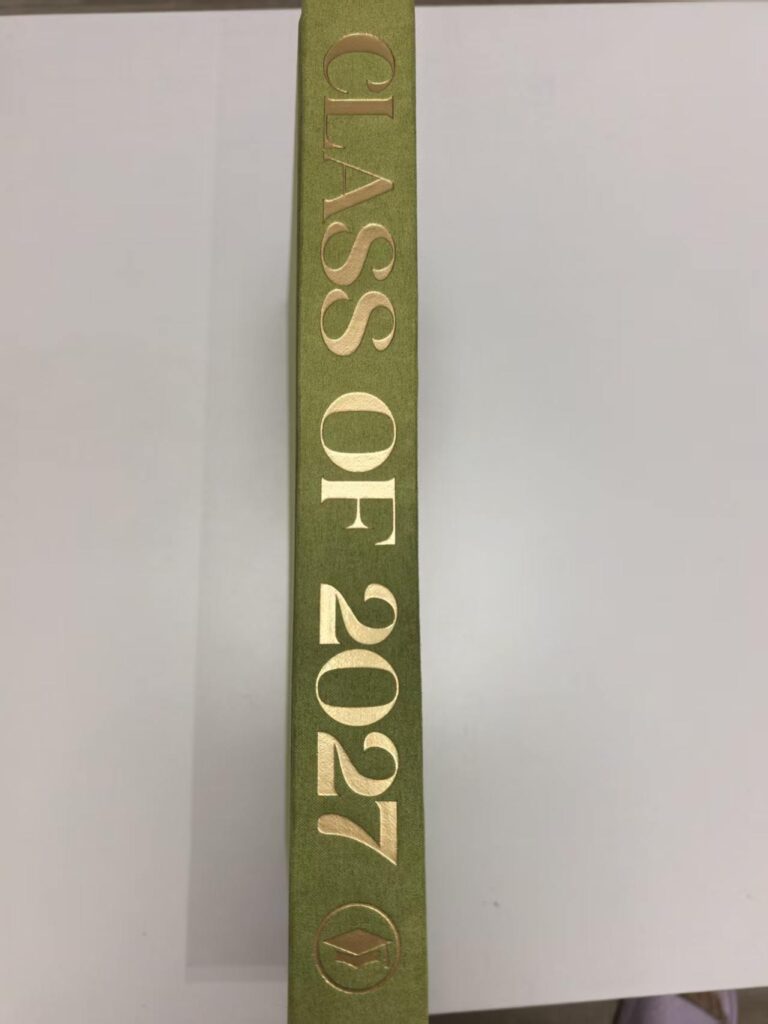
The choice does not have to be binary. Common hybrids include:
- Cloth spine with printed paper sides
- Full cloth case with a printed paper label
- Cloth case under a full-color dust jacket
- Cloth case with a printed belly band
- Printed case inside a cloth-wrapped slipcase
- Printed case with a cloth or specialty-paper spine panel
Hybrid construction is useful when the edition needs tactile material, detailed imagery and a controlled budget. It also creates hierarchy: permanent title information can stay on the case while campaign copy, pricing or retailer-specific details sit on a removable jacket or band.
Why Cover Material Matters More in the Special-Edition Market
Collectors increasingly evaluate a book as a designed object rather than a text placed inside an upgraded cover. Cloth, foil, endpapers, page edges and packaging are expected to tell one story.
Penguin’s Clothbound Classics is a useful long-term case. In its account of the series, Penguin describes 85 clothbound titles released over its first 14 years and explains how the books gained renewed visibility through physical retail and social media. The lesson is not that every classic needs patterned cloth. It is that a repeatable material system can make individual titles recognizable as part of a collection.
The format is still active rather than purely nostalgic. Hachette currently presents a dedicated Signature Clothbound Editions line for gift editions of classic works. At the same time, illustrated paper cases remain a natural choice for image-led publishing because they allow the cover art to carry the sales proposition without requiring a jacket.
For publishers, the strategic questions are:
- Will customers recognize this as a series at thumbnail size and on a shelf?
- Does the material support the genre and retail price?
- Is the main value tactile, graphic or both?
- Can future titles reproduce the same material and finish consistently?
- Does the case survive handling in the intended channel?
A material becomes part of brand equity only when it can be specified, sampled and repeated.
Seven Decisions That Should Determine the Cover Material
1. Is the cover led by imagery or by material?
If the cover requires a photograph, character illustration, complex pattern, gradient or detailed back-cover information, printed paper is the direct route. Color and image detail are produced before the sheet is wrapped around the boards.
Cloth works best when the design can be reduced to a few deliberate elements: a title, symbol, border, pattern, label or tactile impression. Some cloths can be printed, but color gamut, dot sharpness, opacity and registration depend on the surface and process. Do not assume artwork developed for coated paper will transfer unchanged to woven cloth.
For image-heavy interiors and covers, compare the material decision with PrintPack360’s custom hardcover art book printing options. The image reproduction requirement should lead the cover choice, not be treated as a late compromise.
2. What should the book feel like in the hand?
Cloth creates friction, warmth and visible texture. That can support literary fiction, poetry, heritage subjects, museum editions, architecture, hospitality and brand histories. It can also make a restrained cover feel intentional rather than empty.
Paper can feel crisp, smooth, velvety or toothy depending on the stock and finish. A laminated printed case is appropriate when customers will handle the book frequently or when the artwork itself is the main tactile and visual event.
Specify the desired sensation in observable terms. “Luxury” is too vague. “Fine linen weave with a dry hand and clean gold foil on 1 mm title strokes” gives the supplier something testable.
3. How much wear will the book receive?
Material family alone does not establish durability. Library-grade buckram and lightly filled decorative linen are both cloth, but they do not have the same abrasion or moisture behavior. The Library of Congress notes that acrylic-coated buckram can provide strong water, stain, scuff, abrasion and crack resistance, while the Canadian Conservation Institute warns that water can damage many textiles and that light can alter dyes used in both cloth and paper coverings.
For commercial editions:
- Dark open-weave cloth may show dust, fingerprints or rubbed fibers.
- Pale cloth may soil during casing, packing or retail handling.
- Foil on a textured surface may lose small details under repeated rubbing.
- Unlaminated printed paper may mark or absorb moisture.
- Soft-touch lamination can scuff or polish if the film is unsuitable.
- Paper at board corners can split if wrapping, grain direction or handling is poor.
Request a rub test and handling sample based on the actual cover system. A material swatch by itself does not reveal how wrapped corners, hinges and stamped areas will age.
4. Does the design depend on foil or debossing?
Cloth and foil are a classic combination, but not every weave produces a clean stamp. Deep texture reduces the contact area between die, foil and substrate. Fine reversed type, thin rules and large solids may fail in different ways.
Smooth or suitably treated cloth generally supports finer foil detail. Coarser cloth favors larger type and simpler marks. Blind debossing can look elegant but may become visually quiet on dark or heavily textured material.
Printed paper provides a more uniform surface, especially after an appropriate lamination, but heat and pressure must still suit the paper-film combination. Large foil areas can reveal pinholes, uneven release or board irregularities.
Use PrintPack360’s custom gold foil hardcover book printing page as a production reference, then coordinate the substrate choice with the wider hardcover finishing guide.
5. Is exact brand-color matching essential?
A cloth swatch is a physical color standard. The selected stock may be close to a brand color without being an exact match. Custom-dyed cloth can be discussed for appropriate quantities, but it introduces minimums, lead time and batch tolerance.
Printed paper provides more direct CMYK or Pantone control, although the final appearance still depends on paper shade, ink, coating and lamination. Metallic and fluorescent brand colors may require spot ink or foil rather than process printing.
Approve color under defined lighting and on the final substrate. A screen value, fabric photograph or generic Pantone reference is not a substitute for the production material.
6. Will the edition become a repeatable series?
For a series, check long-term supply before making one cloth code the entire identity. Ask whether the material is stocked, made to order or likely to vary between mills and dye lots. Retain a signed swatch and finished production sample, but expect a reasonable batch tolerance rather than perfect identity years later.
Printed paper allows artwork colors to change title by title while the case structure remains consistent. It can be easier to reproduce when the exact cloth is unavailable, provided color standards and proofing are documented.
The strongest series systems usually define both fixed and flexible elements: board thickness, spine architecture and finish position remain fixed; cover color, pattern or title artwork changes.
7. Where will the book be sold and shipped?
Museum stores, bookstores, subscription boxes, crowdfunding fulfillment and corporate gifting expose covers to different risks. A jacketless printed case may be efficient in trade distribution. An unprotected pale cloth book may need individual wrapping. A premium cloth volume sold direct may justify a belly band or slipcase.
When an enclosure is required, compare a book slipcase and jacket set with the structure decision before finalizing case dimensions. The finished cover material and decoration affect slipcase clearance and abrasion risk.
Finish Compatibility: What Usually Works

| Process | Book cloth | Printed paper case | Main approval risk |
|---|---|---|---|
| Foil stamping | Often excellent on compatible smooth or treated cloth | Excellent on suitable paper or lamination | Missing detail, pinholes, poor release and excessive spread |
| Blind debossing | Strong tactile result; visibility depends on color and weave | Clean result on suitable paper and board | Impression too shallow, crushed texture or board show-through |
| Embossing | Possible, but material stretch and weave affect definition | Often more predictable with approved paper | Cracking, registration and inconsistent relief |
| CMYK printing | Limited to designated printable cloth/process combinations | Core strength of the format | Color shift, wrap alignment, scuffing and hinge cracking |
| Screen printing | Useful for bold opaque marks on selected cloths | Possible but less common when offset print is available | Ink opacity, texture and cure |
| Spot UV | Usually unsuitable on open textured cloth | Effective on smooth printed and laminated paper | Weak contrast, registration and adhesion |
| Tipped-on label | Adds detailed imagery without printing the full cloth | Can create a layered design but is less necessary | Label alignment, edge lifting and abrasion |
Compatibility should be proven using the exact combination. “Gold foil on linen” is not a complete specification. Record the cloth code, backing, foil code, die artwork, stamping method and approved result.
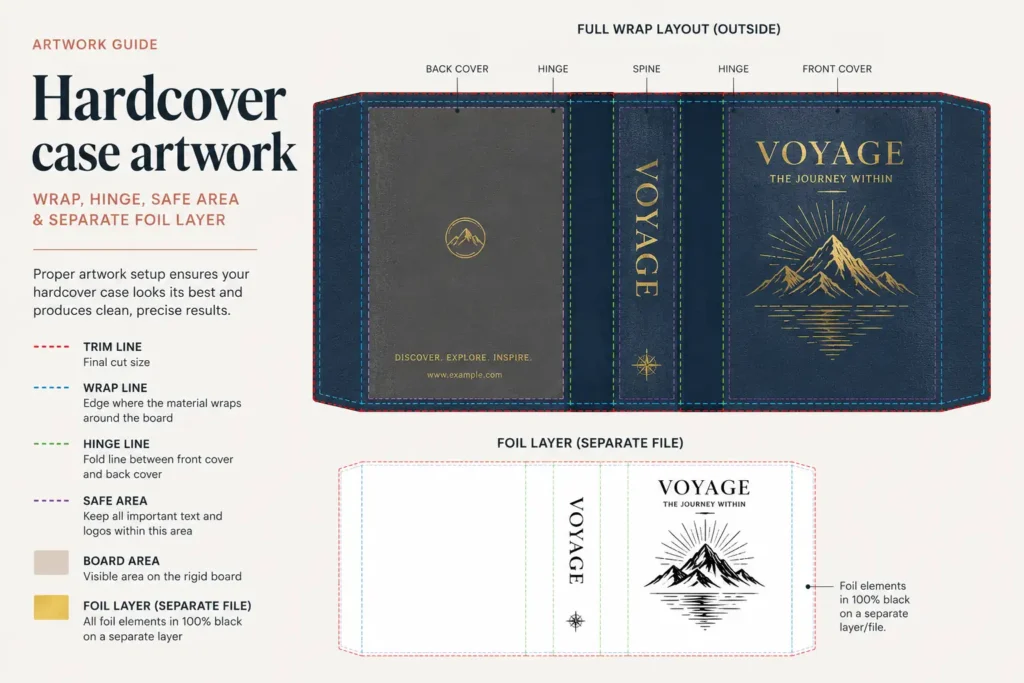
Artwork rules for cloth decoration
- Supply foil, embossing and debossing as vector artwork at final size.
- Use solid spot-color objects rather than raster effects or gradients.
- Avoid hairlines, tiny counters and narrow reversed gaps on coarse cloth.
- Keep important elements away from joints, hinges, board edges and turn-ins.
- Confirm whether front, spine and back require separate die positions.
- Provide a visual composite as well as separate production layers.
Artwork rules for printed paper cases
- Build from the printer’s confirmed case template, not only trim size and spine width.
- Extend artwork through wrap and turn-in areas as instructed.
- Keep critical elements clear of hinges, board edges and expected movement.
- Use sufficient image resolution at final size and prepare files in CMYK.
- Separate foil, spot UV, embossing and die-cut layers from process artwork.
- Check visual alignment around the spine and at paper joins after wrapping.
Decision Table by Publishing Project
| Project | Recommended starting point | Why | Possible hybrid |
|---|---|---|---|
| Literary novel or poetry collection | Book cloth | Tactile restraint supports typography and long-form reading | Cloth plus printed belly band |
| Fantasy or romance collector edition | Cloth or printed case | Cloth supports foil and series identity; paper carries character art | Cloth case plus illustrated jacket or slipcase |
| Photography or fine-art monograph | Printed case | Reproduces artwork and exhibition imagery directly | Cloth case with tipped-on image and slipcase |
| Children’s illustrated hardcover | Printed case | Full-color imagery and wipeable lamination suit retail handling | Printed case plus spot UV or foil |
| Corporate anniversary or luxury brand book | Cloth | Material and restrained logo treatment support gifting | Cloth plus dust jacket or presentation box |
| Museum exhibition catalog | Either | Depends on whether the identity is object-led or image-led | Cloth spine with printed paper sides |
| Cookbook or practical reference | Printed case | Supports food images and benefits from protective lamination | Printed case plus jacket for campaign messaging |
| Numbered fine edition | Cloth | Strong tactile and collectible character | Cloth, foil and fitted slipcase |
| Graphic novel or comic collection | Printed case | Detailed illustrated cover has greater selling value | Printed case plus decorated edges |
| Premium journal or notebook | Cloth | Daily touch and understated branding matter | Cloth plus foil and belly band |
This table is a starting point, not a rulebook. A minimal printed paper case may suit a literary edition, while a printable cloth can carry illustration. The manufacturing sample should decide whether the exception works.
Proofing and Quality Control: Approve the Material System
A PDF proof can confirm position and content. It cannot confirm weave, color under real light, foil adhesion, deboss depth, corner wrapping or rubbing.
1. Material shortlist
Ask for labeled swatches with supplier codes. Compare color, texture, backing, opacity, grain direction and finish compatibility. For printed paper, compare the intended stock both before and after lamination or coating.
2. Decoration test
Test the most difficult artwork, not only the easiest logo. Include fine positive lines, reversed type, a representative solid and any adjacent foil/deboss registration. A small flat test is useful for screening materials.
3. White dummy or case dummy
Confirm board thickness, overall dimensions, joint width, spine shape, opening and weight. The dummy also establishes whether a jacket, belly band or slipcase fits the finished case.
4. Bound printed sample
Approve the actual material, print, foil, endpapers, binding and packing together. Examine the book closed, open and under side lighting. Repeat normal handling rather than judging an untouched sample for thirty seconds.
5. First-off and batch inspection
Convert subjective expectations into observable criteria:
- Correct cloth or paper code and approved color range
- No visible bubbles, lifting, exposed board or adhesive staining
- Consistent square and undamaged corners
- Cover artwork aligned within the agreed production tolerance
- Foil has acceptable coverage without unintended filling or missing detail
- Deboss or emboss is consistent with the signed sample
- Hinges open without cracking, delamination or excessive tension
- Cases remain flat and square after conditioning
- No unacceptable scuffing or color transfer after normal handling
- Jackets, bands and slipcases fit without abrading the cover
Sampling should reflect risk. A simple one-color printed case may need less development than a coarse cloth with fine foil, debossing and a tight slipcase. PrintPack360’s sample strategy explains why digital proofs, dummies and production samples answer different questions.
Cost, Lead Time and Responsible Sourcing
What changes the cost?
The covering material is only one line in the quotation. Total cost can change with:
- Stocked versus custom-sourced cloth
- Cloth width, cutting yield and required quantity
- Printed sheet size, paper grade and ink coverage
- Lamination or specialty coating
- Number of foil colors and stamping positions
- Embossing or debossing dies
- Tipped-on labels, bands or jackets
- Spoilage allowance for difficult materials
- Hand assembly and inspection standard
- Individual wrapping, slipcases and export packing
Printed paper is often cost-efficient when full-color artwork is already required. Cloth may become competitive when the design uses a stock color and one restrained stamp. Conversely, a custom cloth, multiple foil passes and a printed belly band can cost substantially more than a laminated printed case.
Compare quotations using one fixed book specification and three cover options:
| Quote version | Cover specification | Purpose |
|---|---|---|
| A: Commercial | Printed paper case, protective lamination | Establish the functional baseline |
| B: Material-led | Stock book cloth, one foil or blind deboss | Measure the cost of tactile differentiation |
| C: Collector | Cloth case, premium finish and slipcase or jacket | Test whether the higher retail tier supports the upgrade |
The wider hardcover book printing cost guide can help separate fixed setup costs from quantity-sensitive unit costs.
Responsible sourcing without vague claims
Ask for material documentation before artwork is locked. FSC-certified paper and board may be available, but certification claims depend on the supplier chain, eligible inputs and approved labeling. Textile composition, backing and coatings should also be identified where recyclability or restricted-substance requirements matter.
Do not assume cloth is environmentally preferable because it appears natural, or paper is automatically preferable because it is fiber-based. Compare:
- Verified fiber source and recycled content
- Coatings, laminations and mixed-material construction
- Material yield and production waste
- Durability and expected replacement rate
- Finished weight and freight volume
- Whether magnets, foam or plastic components are added
- The documentation required by the destination market
A simpler book that reaches the customer undamaged can be a more defensible choice than an elaborate structure supported only by broad environmental language.
Information to Send for an Accurate Quote
Send one complete brief rather than asking for “cloth hardcover price” in isolation:
- Book purpose, audience, sales channel and target retail position
- Finished trim size, page count and quantity breaks
- Interior paper, printing and binding method
- Square or round spine and required opening behavior
- Cover board thickness or desired rigidity
- Preferred cloth supplier code or physical reference
- Printed paper stock and lamination requirement
- Cover artwork and number of printed colors
- Foil color, artwork size and stamping positions
- Embossing, debossing, spot UV or tipped-on label requirements
- Endpapers, headbands, ribbon, jacket, belly band or slipcase
- Proofing and approval expectations
- Individual wrapping and carton requirements
- Delivery city, postal code, deadline and preferred shipping method
- Compliance or material documentation required
When the material is undecided, request the same quantity against two controlled alternatives. Keep page count, board, binding and packing identical so the quotation reveals the real effect of the cover choice.
Practical Recommendation
Choose book cloth when the edition’s value comes from touch, restraint, series identity and a small number of well-executed decorative elements. Choose a printed paper case when photography, illustration, precise graphic storytelling or economical full-color coverage carries the product.
Use a hybrid when the cover is being asked to do too much. Cloth can provide the permanent object while a jacket or belly band carries detailed sales information. Printed paper can carry the artwork while a cloth spine, slipcase or specialty label introduces material contrast.
Above all, approve the exact material-and-finish combination physically. The difference between a premium result and an expensive disappointment is often one swatch code, one line-weight adjustment or one handling test completed before bulk production.
FAQ
Is book cloth more durable than a printed paper case?
Not automatically. Coated buckram can be highly resistant, while an open decorative cloth may mark or fray. A laminated printed case can resist ordinary scuffing well, but corners and hinges still require good construction. Compare the exact materials and intended use.
Is a cloth-bound hardcover always more expensive?
No. Cost depends on cloth sourcing, quantity, cutting yield, decoration, setup and packing. A stock cloth with one foil stamp may be efficient, while custom cloth and several finishing passes can be costly. Printed paper is often economical when complex full-color artwork is required.
Can full-color images be printed on book cloth?
Some cloths are designed for printing, but image sharpness, color gamut and opacity depend on the weave, coating and process. Detailed photography is usually more predictable on printed paper. Test the intended cloth rather than relying on a generic fabric mockup.
Can foil stamping be applied to linen book cloth?
Yes, on many suitable materials. Coarse texture can interrupt foil coverage and close fine artwork. Select the exact cloth first, simplify fragile details where needed and approve a physical foil test before production.
What is paper over board hardcover binding?
It is a casebound hardcover whose rigid boards are wrapped with printed or specialty paper. The term describes the covering material, not whether the text block is sewn or adhesive bound.
Does a printed paper case need lamination?
Not always, but lamination often improves resistance to scuffing, moisture and handling. Uncoated or specialty paper may be chosen for a particular feel. In that case, test rubbing, ink set-off and corner wear before approval.
Should a clothbound book also have a dust jacket?
Use a jacket when the project needs detailed imagery, sales copy or additional surface protection while preserving a restrained cloth case underneath. Skip it when direct tactile contact and a jacketless shelf appearance are central to the concept.
Which material is better for foil stamping?
Both can work well. Smooth, treated cloth and suitable laminated or specialty paper generally give cleaner results than coarse or unstable surfaces. The exact substrate, foil, die and artwork must be tested together.
What proof should I request before bulk production?
At minimum, review labeled material swatches, a finish test and a bound production-representative sample. For complex projects, add a white dummy, first-off check and retained approval sample for batch comparison.