Technical Analysis: Substrate Selection Protocols for High-Volume Book Manufacturing
1. Introduction: The Engineering of the Page
In the domain of industrial book manufacturing, the substrate is not merely a passive carrier of ink; it is the fundamental structural component that dictates the mechanical integrity, optical performance, and tactile reception of the final product. For print engineers and procurement directors, the selection of paper is a multi-variable optimization problem involving rheology (ink flow), optics (opacity and brightness), and mechanics (tensile strength and folding endurance).
The interaction between the paper surface and the offset or digital ink chemistry determines the fidelity of the reproduction. A suboptimal substrate selection can lead to catastrophic production failures, including excessive dot gain, poor ink adhesion, web breaks on rotary presses, or binding failures due to incorrect grain direction. Furthermore, the paper constitutes the single largest cost center in book production, often exceeding 40-50% of the total manufacturing expense.
The objective of this technical whitepaper is to provide a rigorous analysis of common paper classifications, define the engineering parameters for their selection, and offer strategic recommendations for specific publishing applications. This guide is intended to transition the decision-making process from subjective aesthetic preference to objective technical specification.
2. Classification of Common Book Printing Substrates
The paper market for book production is segmented by surface treatment, fiber composition, and finishing. Understanding the distinct physical properties of these categories is prerequisite to effective supply chain management.
Coated Art Paper (C1S/C2S)
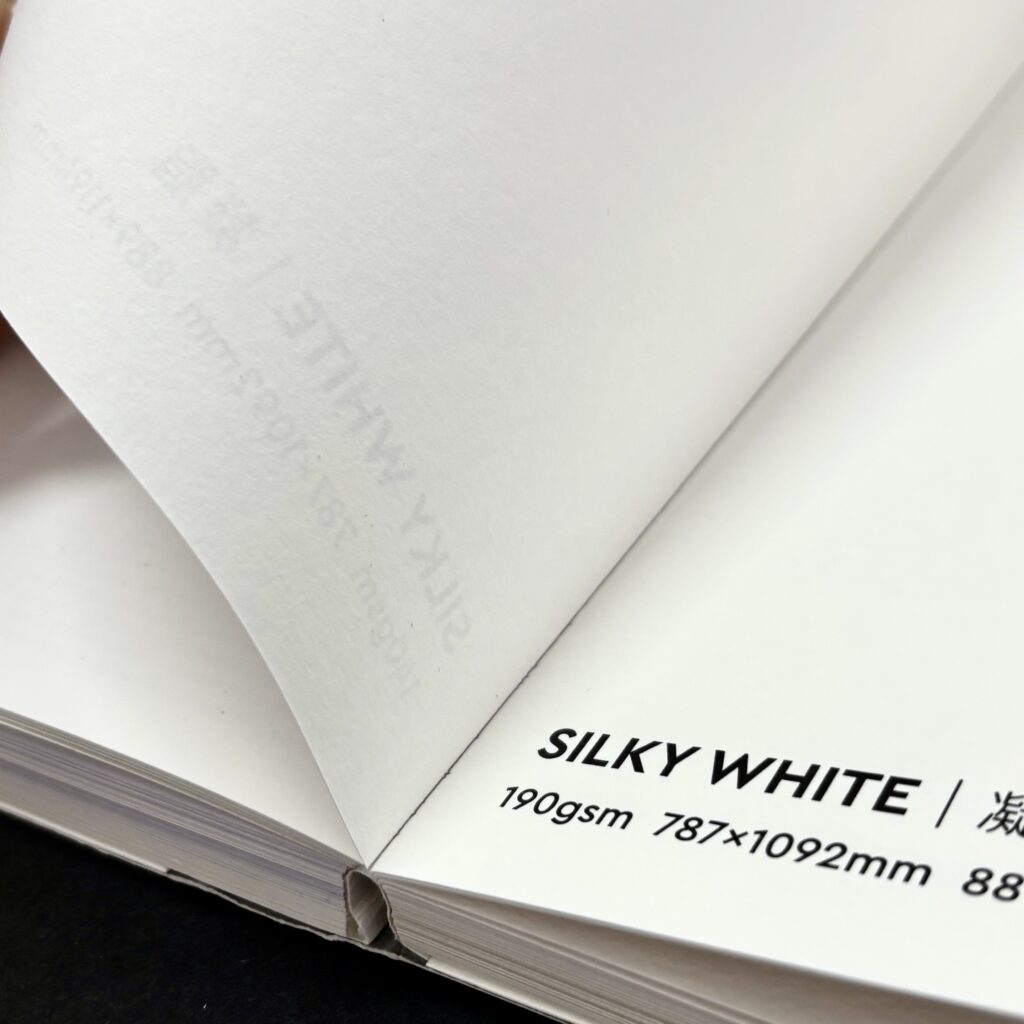
Coated papers undergo a manufacturing process where a slurry of clay (kaolin), calcium carbonate, and binders is applied to the base sheet. This coating fills the interstitial voids between fibers, creating a uniform, non-porous surface.
Surface Profile: High smoothness, low porosity
Ink Holdout: Superior (Ink sits on surface)
Common Grammage: 80gsm – 350gsm
Technical Characteristics: The primary advantage of Art Paper is “ink holdout.” Because the coating prevents the ink vehicle from penetrating deep into the fibers, the pigment remains on the surface, resulting in a higher color gamut and sharper dot retention. However, the coating adds density without adding significant bulk (thickness), making the paper heavy but relatively thin. It is susceptible to “cracking” at the fold if not properly scored, particularly in heavier weights.
Woodfree Offset Paper (Uncoated)

Often referred to as “Bond” or “Offset,” this is an uncoated stock manufactured using chemical pulp (woodfree) where lignin has been removed. Surface sizing is typically applied to control surface strength and reduce linting.
Surface Profile: Rough, macroporous
Ink Absorption: High (Results in dot gain)
Whiteness: Variable (Natural to High White)
Technical Characteristics: Offset paper relies on absorption for ink drying. Consequently, it suffers from higher Total Value Increase (TVI), or dot gain, meaning images will appear softer and less sharp than on coated stock. Its primary engineering advantages are high tensile strength and excellent readability due to the lack of specular reflection (glare). It is the workhorse for text-heavy applications.
Book Publishing Paper (Text/Bulky/Cream)

A specialized sub-category of uncoated paper, specifically engineered for the publishing industry. These papers are defined by their “bulk” or “volumetric yield”—the thickness of the paper relative to its weight.
Bulk Factor: 1.3 – 2.0 cm³/g
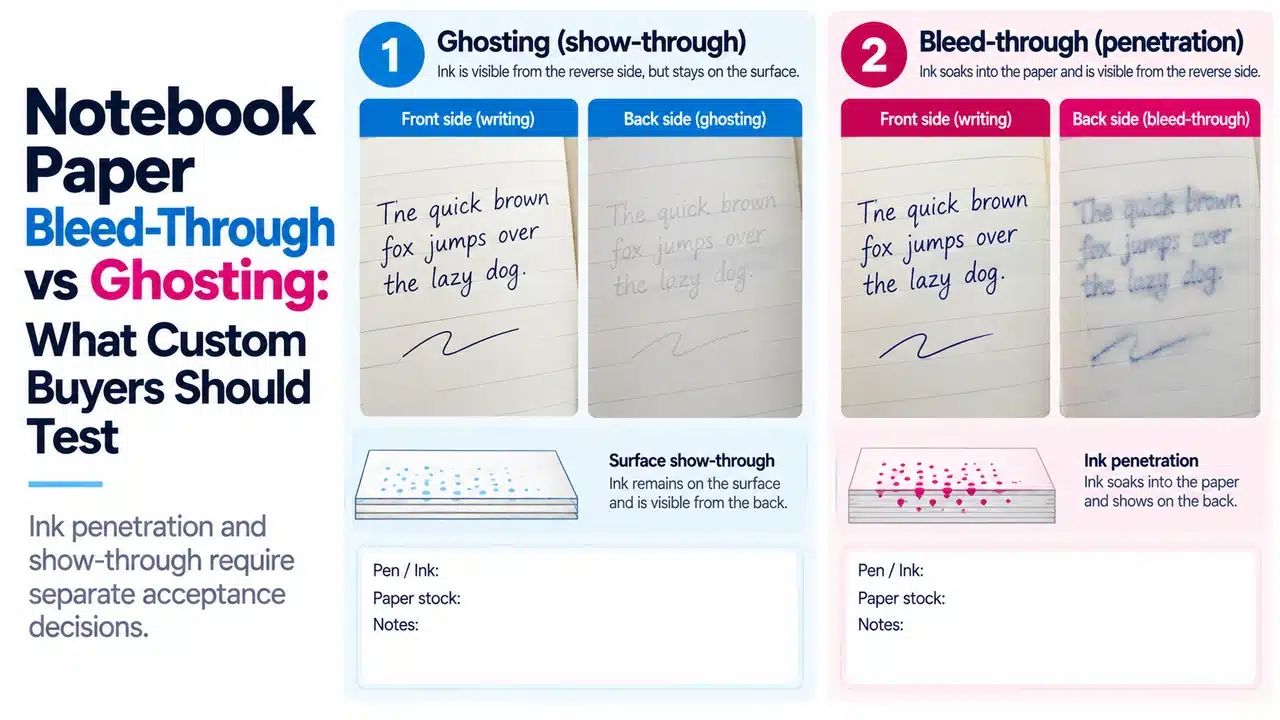
Opacity: High (Crucial for duplex printing)
Hue: Cream/Ivory (Reduces eye strain)
Technical Characteristics: High-bulk papers allow a book with a lower page count to achieve a substantial spine width, enhancing shelf presence. The mechanical pulp content often used here provides high opacity, preventing “show-through” of text from the reverse side. The cream or ivory tint is engineered to reduce the contrast ratio slightly, minimizing reader fatigue during extended reading sessions.
Kraft Paper

Produced via the kraft process (sulfate pulping), this substrate retains the natural brown color of the wood pulp and maintains exceptionally long fibers.
Tensile Strength: Very High
pH Level: Acidic to Neutral
Aesthetic: Organic, Industrial
Technical Characteristics: Kraft paper is characterized by high tear resistance and burst strength. While historically used for packaging, it has entered the book market for covers and dust jackets requiring a rustic or eco-centric aesthetic. However, its dark base color severely limits the printable color gamut, necessitating the use of opaque white inks or metallic foils for legibility.
Recycled Paper (PCW)

Recycled stocks are categorized by the percentage of Post-Consumer Waste (PCW) fiber.
Fiber Structure: Shortened (Due to reprocessing)
Impurities: Higher speck count
Stability: Lower dimensional stability
Technical Characteristics: The de-inking and repulping process shortens cellulose fibers, reducing the paper’s structural strength. To compensate, virgin fibers are often blended in. Recycled papers are more porous and may have higher dust levels, which can contaminate offset blankets, requiring more frequent press wash-ups.
Technical Comparison Matrix
The following data illustrates the comparative technical specifications of the primary substrates discussed.
| Paper Type | Surface Smoothness (PPS) | Ink Holdout | Bulk (cm³/g) | Opacity (at 100gsm) | Primary Application |
|---|---|---|---|---|---|
| Gloss Art (Coated) | 0.8 – 1.2 µm | Excellent | 0.85 – 0.95 | 92% | Photography, Art Books, Catalogues |
| Matte Art (Coated) | 1.5 – 2.5 µm | Very Good | 0.90 – 1.05 | 94% | Corporate Reports, Illustrated Text |
| Woodfree Offset | 4.0 – 6.0 µm | Moderate | 1.10 – 1.25 | 90% | Instruction Manuals, Workbooks |
| Book Paper (Cream) | 5.0 – 7.5 µm | Low | 1.50 – 2.00 | 96% | Novels, Biographies, Literature |
| Kraft Paper | > 8.0 µm | Poor | 1.30 – 1.60 | 98% (Dark) | Eco-Covers, Packaging Inserts |
3. Engineering Criteria for Substrate Selection
Selecting the appropriate paper is not a singular decision but a matrix of interdependent variables. The following criteria must be evaluated hierarchically.
Content Taxonomy and Genre
The nature of the content dictates the physical requirements of the substrate.
Literature/Fiction: Requires high-bulk, uncoated cream stock (60-80gsm). The priority is opacity and lack of glare.
Reference/Textbooks: Requires durable, lower-bulk woodfree offset (70-90gsm). These books have high page counts; using high-bulk paper would result in an unmanageable spine width.
Art/Architecture: Requires heavy coated stock (128-157gsm). The priority is the preservation of the dynamic range of photographic images.
Printability and Rheology
The “Printability” of a paper is defined by its ability to accept ink transfer without artifacts.
Color Gamut: If the project requires Pantone matching or high-fidelity CMYK reproduction, coated paper is mandatory. Uncoated papers can lose up to 20% of color saturation due to absorption.
Resolution: For micro-text or fine-line diagrams, the surface topography must be smooth. Rough papers cause “wicking,” where ink spreads along fiber capillaries, blurring fine details.
Caliper, Bulk, and Spine Calculation
Paper weight (GSM – Grams per Square Meter) is distinct from Paper Thickness (Caliper). Two papers can both be 80gsm, but one may be 80 microns thick while the other is 120 microns thick (high bulk).
Spine Width Formula: (Page Count / 2) × Caliper = Spine Width.
Implication: A miscalculation in paper bulk can lead to cover artwork being misaligned or the book block not fitting into the case-binding machine.
Sustainability vs. Economics
Environmental compliance (FSC, PEFC) is now a standard requirement. However, recycled papers often carry a premium cost (10-15% higher) due to processing complexity. The engineer must balance the “Green Premium” against the physical degradation of recycled fibers. A balanced approach often involves using FSC-Certified Mix (Virgin + Recycled) to maintain strength while meeting sustainability goals.
4. The Physics of Print Quality Interaction
The substrate acts as the foundational layer for the subtractive color model. Its interaction with light and ink defines the perceived quality.
Chromatic Aberration and Absorption
When ink hits paper, two phases occur: setting (absorption of the vehicle) and drying (oxidation of the pigment).
Coated Papers: The vehicle is filtered by the coating, leaving the pigment on top. This results in a “snap” or high gloss differential between the image and the paper.
Uncoated Papers: The ink penetrates the fiber matrix. This causes light scattering within the paper structure, desaturating the color. This is known as “dry-back.”
Text Definition and Contrast
For continuous reading, maximum contrast (Black ink on Bright White paper) is actually detrimental. It causes “dazzle” or retinal fatigue. This is why “Off-White” or “Natural” shades are engineered for novels. Conversely, for technical manuals where quick scanning is required, high-brightness white offset paper is preferred to maximize legibility of charts and graphs.
Surface Gloss and Haptics
The tactile experience (haptics) influences the perceived value of the book.
Gloss: High energy, dynamic, but prone to fingerprints and glare.
Matte/Silk: Sophisticated, smooth but non-reflective.
Uncoated: Organic, honest, textural.
Warning: Heavy ink coverage on matte paper can lead to “rub-off” or scuffing during shipping. A protective aqueous varnish is recommended.
5. Strategic Procurement Recommendations
Based on two decades of industrial observation, Printpack360 recommends the following specification clusters for major book categories.
Fine Art and Photography Monographs
Recommendation: 157gsm Grade A Matte Art Paper.
Rationale: 157gsm provides sufficient opacity and a luxury feel without making the book uncomfortably heavy. Matte finish reduces glare on the images while maintaining color fidelity.
Add-on: Spot UV coating on images to create contrast against the matte background.
Academic Textbooks and Manuals
Recommendation: 70gsm or 80gsm Woodfree Offset (High White).
Rationale: Textbooks often exceed 500 pages. Using 80gsm keeps the weight manageable. High whiteness aids in the legibility of complex diagrams and footnotes.
Cost Control: Standardize on common reel widths to minimize trim waste.
Mass Market Paperbacks
Recommendation: 60gsm High-Bulk Book Paper (Cream).
Rationale: Maximizes spine width for shelf visibility while minimizing shipping weight. The cream color hides the lower quality of the mechanical pulp and improves readability.
Eco-Conscious Corporate Publications
Recommendation: 100% Recycled Uncoated with FSC Certification.
Rationale: Aligns with CSR (Corporate Social Responsibility) goals.
Mitigation: Use bold typography and vector graphics rather than heavy photographic coverage to mask the lower brightness of the sheet.
| Category | Recommended Substrate | Weight (GSM) | Critical Spec | Cost Index |
|---|---|---|---|---|
| Coffee Table Book | C2S Art Paper (Gloss/Matte) | 157 – 200 | Surface Smoothness | High |
| Novel (Hardcover) | Woodfree Cream (High Bulk) | 80 – 100 | Bulk (Volumetric) | Medium |
| Novel (Paperback) | Mechanical Book Paper | 55 – 60 | Opacity | Low |
| Children’s Book | C1S Board / Heavy Offset | 300+ / 140 | Tear Resistance | Medium-High |
6. Common Specification Errors and Avoidance
In the technical specification phase, several recurring errors can compromise the project.
The “Gloss Trap”
Error: Selecting high-gloss paper for text-heavy books to make them look “premium.”
Consequence: The specular reflection makes reading difficult under direct light.
Correction: Limit gloss stocks to image-centric sections or use matte stocks for mixed content.
Ignoring Grain Direction
Error: Failing to specify grain direction relative to the spine.
Consequence: If the grain runs perpendicular to the spine (cross-grain), the book will not open flat, the pages will resist turning, and the binding glue may fail.
Correction: Always specify “Grain Long” or “Grain Short” to ensure the grain runs parallel to the spine.
The Caliper/Weight Confusion
Error: Assuming higher GSM equals a thicker book.
Consequence: A 100gsm art paper is thinner than an 80gsm bulky book paper. This leads to incorrect cover spine designs.
Correction: Always request a “dummy” (unprinted prototype) using the exact paper batch to measure the actual spine width.
Cost Myopia
Error: Selecting the cheapest paper grade (Grade C) to save 5%.
Consequence: Lower grade papers often have high dust levels (hickies on print), poor moisture stability (registration errors), and lower opacity. The cost of press downtime and waste often exceeds the savings on the paper.
7. Conclusion
The selection of paper for book printing is a foundational engineering decision that impacts the entire manufacturing lifecycle—from the pressroom to the bindery, and ultimately to the end-user’s hands. It requires a holistic understanding of material science, optical physics, and supply chain economics.
There is no single “perfect” paper; there is only the optimal substrate for a specific set of constraints. By analyzing the genre, the required print fidelity, the durability requirements, and the budget, technical directors can engineer a product that balances aesthetic excellence with commercial viability.
Printpack360 Solutions for Substrate Challenges
With over 20 years of leadership in the paper engineering and packaging sector, Printpack360 offers more than just printing services; we provide comprehensive material consultation.
Our Technical Advantage:
Global Mill Partnerships: We source directly from Tier-1 mills in Asia, Europe, and North America, ensuring consistent batch quality and access to specialized high-bulk and art stocks.
In-House Material Lab: Printpack360 conducts rigorous pre-production testing, including Cobb sizing tests (moisture absorption), folding endurance verification, and opacity checks to ensure the paper meets your exact specifications before the presses run.
Dummy Production Service: We provide precise, bound prototypes using the actual specified stock, allowing you to verify bulk, weight, and feel before committing to mass production.
Whether you are producing a million-copy textbook run or a limited-edition art monograph, Printpack360 ensures that the science of the substrate supports the art of your content.