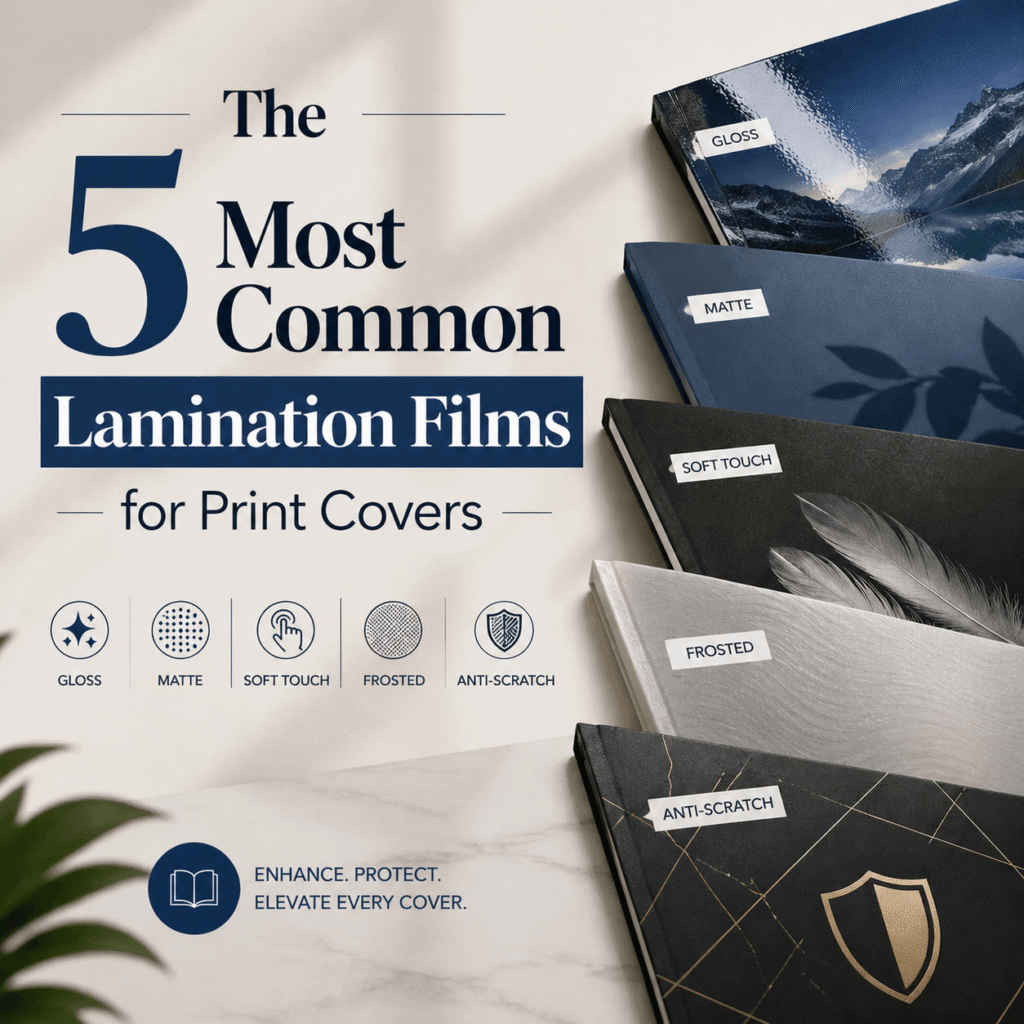
The 5 Most Common Lamination Films for Print Covers — Which Wins?
Published: April 2026 | Read time: ~9 min
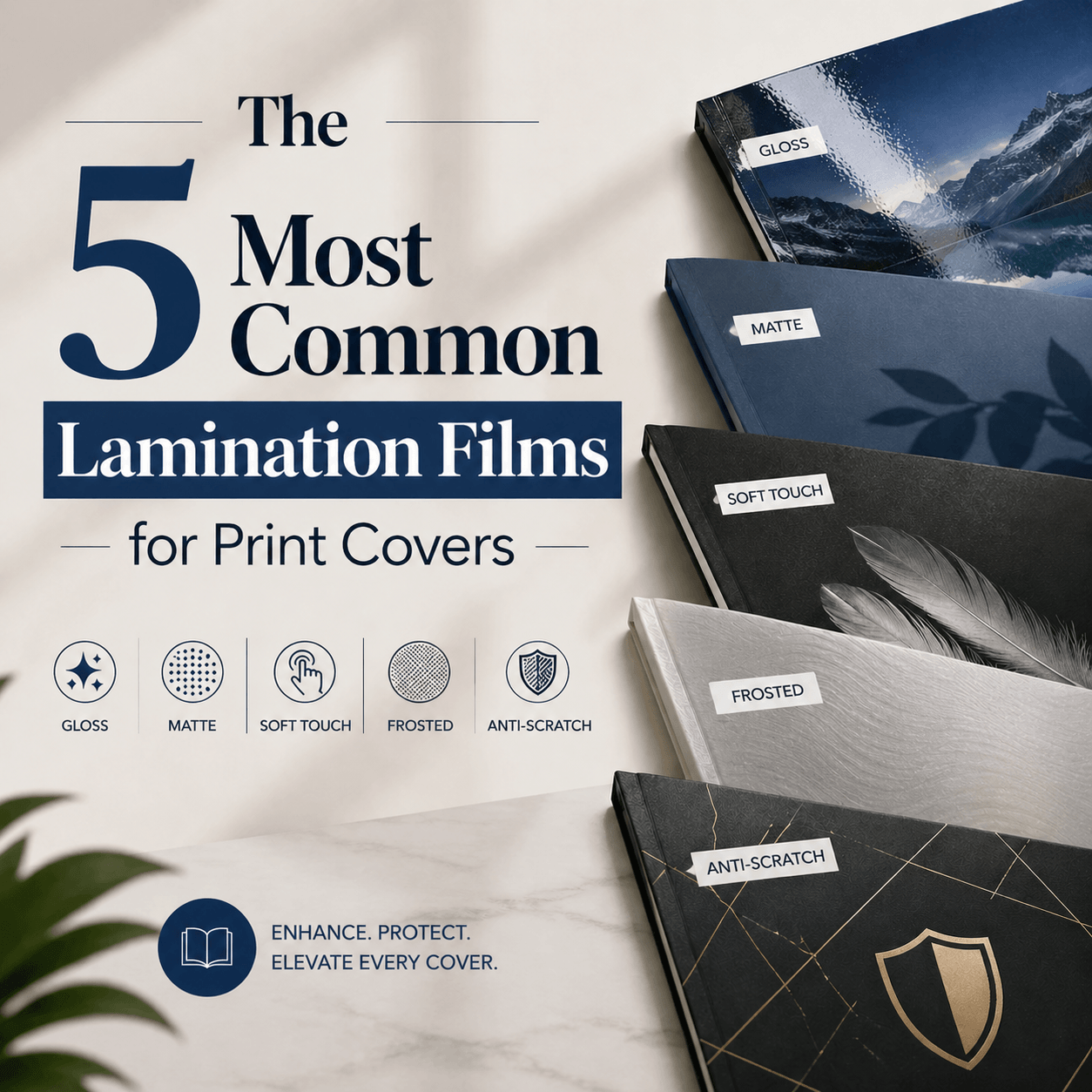
Table of Contents
- Why Lamination Matters for Print
- The 5 Main Types of Lamination Film
- Gloss Lamination — Affordable but Fragile
- Matte Lamination — Elegant but Color-Shifting
- Soft-Touch Lamination — Luxurious but High-Maintenance
- Anti-Scratch Lamination — Why It’s Our Top Recommendation
- Frosted/Matte-Coated Film — A Niche Option
- Side-by-Side Comparison
- How to Choose the Right Film for Your Project
- FAQ

1. Why Lamination Matters for Print
If you print anything that will be touched, displayed, or passed around — a catalog, a packaging box, a menu, a lookbook — lamination isn’t optional. It’s essential.
Without it, your print products face real-world damage immediately:
| Problem | Without Lamination | With Lamination |
|---|---|---|
| Scratches & scuffs | Fingernails, keys, coins — all leave marks | Protected surface stays pristine |
| Water & moisture | One coffee spill = ruined print | Wipe clean, no damage |
| Fading & oxidation | Colors fade in 3–6 months | Lifespan extended by years |
| Fingerprints & smudges | Every touch leaves marks | Smooth surface, easy to clean |
| Physical wear | Corners fold, edges tear after a few uses | Durability multiplied |
The question isn’t whether to laminate — it’s which film to choose. Let’s break down the five main options.
2. The 5 Main Types of Lamination Film
| Film Type | Also Known As | Material | Sheen |
|---|---|---|---|
| Gloss Lamination | Gloss film, high-shine | BOPP / PET | High gloss |
| Matte Lamination | Matte film, no-glare | BOPP / PET | Zero sheen |
| Soft-Touch Lamination | Velvet laminate, silk-touch | Specialty BOPP | Suede-like matte |
| Anti-Scratch Lamination | Anti-scuff, hard-coat, scratch-resistant | PET + hard coating | Semi-matte |
| Frosted Lamination | Sandy laminate, textured | PVC / PET | Frosted/dusty |
3. Gloss Lamination — Affordable but Fragile
What It Is
A transparent BOPP or PET film applied over the print surface, creating a high-shine, reflective finish. This is the most common and cheapest lamination option in the industry.
Pros
- ✅ Vibrant color — Makes images pop and saturated
- ✅ Lowest cost — Budget-friendly for large print runs
- ✅ Water resistant — Basic protection against moisture
- ✅ Universal availability — Every printer can do it
The Fatal Flaw: It Scratches Immediately
Here’s the problem that every printer and designer knows but clients often discover too late:
“The cover looked great on delivery. After the first trade show, it was covered in fingernail marks. We were embarrassed to hand them out.” — Project manager at a mid-size marketing agency
Gloss film has a hardness of roughly 2H pencil. That’s soft enough that a fingernail — or a business card sliding across the surface — will leave permanent visible scratches. And here’s the cruel irony: scratches on glossy film are MORE visible than on matte, because the reflected light catches every imperfection.
Real-world damage happens fast:
- Trade show materials — dozens of visitors touching, flipping, judging
- Restaurant menus — flipped hundreds of times per week by staff and customers
- Product catalogs — tossed in bags with phones, pens, keys
- Luxury packaging — devalued the moment it’s unboxed and displayed
Best For
Short-term, low-use, disposable prints where budget is the primary constraint: promotional flyers, one-time event materials, throwaway inserts.
4. Matte Lamination — Elegant but Color-Shifting
What It Is
A flat, non-reflective film that gives prints a sophisticated, low-key appearance. Widely considered the “premium” choice for upscale brand materials.
Pros
- ✅ Sophisticated look — No glare, reads well under any lighting
- ✅ Fewer fingerprints — Not immune, but much better than gloss
- ✅ Premium perception — Clients associate matte with quality
The Hidden Problem: Color Shift
This is the issue that causes the most client disputes. When matte lamination is applied, the overall color of the print darkens by approximately 15–25%. Warm tones shift cooler, bright reds become burgundy, and any design relying on color accuracy will look noticeably different from the original file.
Real client experience:
“We spent three rounds of proofs trying to match the brand’s exact blue. By the time we got it right, we’d wasted two weeks and hundreds of dollars in reprints. The matte finish looked beautiful — but the color mismatch was a nightmare.” — Creative director, boutique design studio
Beyond color shift, matte is still only moderately scratch-resistant. It’s better than gloss, but a sharp object will still leave a mark.
Best For
Display-only prints that won’t be physically handled: framed art prints, wall calendars, museum exhibition panels, high-end photography where color accuracy is less critical than atmosphere.
5. Soft-Touch Lamination — Luxurious but High-Maintenance
What It Is
A specialty film with a micro-velvet coating that feels like suede or warm skin. The tactile experience is genuinely unique — people literally can’t stop touching it. Popular for luxury packaging, premium catalogs, and high-end brand collateral.
Pros
- ✅ Unmatched tactile appeal — The “wow” factor is real
- ✅ Premium brand positioning — Instantly elevates perceived value
- ✅ Smudge resistant — The textured surface resists oil transfer
The Luxury Trap: Beauty Doesn’t Last
Soft-touch is gorgeous on day one. By month three, it’s a different story.
The suede-like coating is actually softer than standard matte — which means it’s more susceptible to wear. Daily handling smooths out the micro-texture, gradually eliminating that distinctive velvet feel. Once it starts wearing, it looks worse than a standard matte finish, because the irregular sheen becomes obvious.
“Our clients love picking up the packaging — until they realize their fingerprints are slowly erasing the texture. We had to switch to anti-scratch for our best-selling product line.” — Packaging designer, cosmetics brand
Additional drawbacks:
- Price — 1.5–2x the cost of matte or gloss
- Color shift — Same 15–25% darkening as matte
- Limited availability — Not every printer can produce it consistently
Best For
Premium packaging for limited-run or display-only products where the unboxing experience is paramount and the product isn’t handled extensively: luxury watch boxes, high-end cosmetics, limited-edition book covers, VIP gift sets.
6. Anti-Scratch Lamination — Why It’s Our Top Recommendation
What It Is
A next-generation lamination film with a hard ceramic or silica-based coating applied over PET or BOPP base film. This creates a surface hardness of 4H–6H pencil rating — comparable to a laminate countertop or a smartphone screen protector.

Pros: It Solves Every Other Film’s Problems
| Problem Solved | Gloss | Matte | Soft-Touch | Anti-Scratch |
|---|---|---|---|---|
| Scratch resistance | ❌ | ⚠️ | ❌ | ✅ |
| No color shift | ✅ | ❌ | ❌ | ✅ |
| Fingerprint resistant | ❌ | ⚠️ | ✅ | ✅ |
| Maintains look over time | ❌ | ⚠️ | ❌ | ✅ |
| Reasonable cost | ✅ | ✅ | ❌ | ✅ |
Anti-scratch film delivers the best balance across all metrics. It’s semi-matte (not shiny, not flat), it keeps colors accurate, it resists scratches from fingernails and general handling, and it maintains its appearance over years of use.
Real Case Studies
Case Study 1: Meridian Consulting Group — Annual Client Reports Meridian prints 3,000 copies of their annual client report every January. Previous gloss-laminated covers were destroyed within the first quarter — covered in meeting room handling, courier transit, and executive desk clutter.
After switching to 4H anti-scratch lamination, the same print run lasted the full year with minimal visible wear. Printing cost increased by 12%; report replacement cost dropped to nearly zero. Net savings: approximately $4,200/year.
Case Study 2: Terra Bistro Chain — In-Store Menus A 14-location restaurant chain was replacing their table menus every 6–8 weeks. The matte-laminated covers showed wear, smudges, and torn corners from daily use by hundreds of customers.
Switching to anti-scratch semi-matte film extended menu lifespan to over 6 months per print run. The menus felt more premium (customers commented on the “smooth but not slippery” texture), and the chain reduced print spending by 34%.
Case Study 3: Helios Outdoor Gear — Product Catalog Outdoor catalogs face extreme handling: wet hands at trade shows, dusty retail environments, folding and refolding by sales staff. Their previous soft-touch covers looked worn within weeks.
Anti-scratch lamination maintained the catalog’s premium appearance through an entire 4-month trade show season plus a full retail year. Return on investment: $1.80 in material savings for every $1.00 spent on the upgrade.
Best For
Literally everything that gets touched. This includes:
- Company catalogs and lookbooks
- Product manuals and reference guides
- Restaurant menus and hotel compendiums
- Retail packaging that moves through the supply chain
- Trade show materials and press kits
- Any print that needs to last more than a few weeks
A Note on Quality
Not all anti-scratch films are equal. Look for products rated 4H or higher on the pencil hardness scale. Some budget “anti-scratch” films are barely better than standard matte. When in doubt, request a sample pack and test it with your own fingernail.
7. Frosted/Matte-Coated Film — A Niche Option
What It Is
A film with a translucent, sandy or frosted texture. Creates a distinctive semi-transparent, dusty appearance.
Pros
- ✅ Unique visual texture — Stands out from standard gloss/matte
- ✅ Good for privacy — Slightly obscures what’s underneath
- ✅ Decent grip — Non-slip surface
Cons
- ❌ Textured surface traps dirt and oils — difficult to clean
- ❌ Texture wears down with heavy use, losing its distinctive look
- ❌ Colors appear slightly muted and desaturated
- ❌ Not suitable for thin paper stocks
Best For
Partial lamination effects (spot frost over gloss), artistic packaging, craft products, or as a design accent rather than a full-cover solution.
8. Side-by-Side Comparison
| Factor | Gloss | Matte | Soft-Touch | Anti-Scratch | Frosted |
|---|---|---|---|---|---|
| Scratch resistance | ⭐ | ⭐⭐ | ⭐ | ⭐⭐⭐⭐⭐ | ⭐⭐ |
| Color accuracy | ⭐⭐⭐⭐⭐ | ⭐⭐ | ⭐⭐ | ⭐⭐⭐⭐ | ⭐⭐ |
| Premium feel | ⭐⭐ | ⭐⭐⭐ | ⭐⭐⭐⭐⭐ | ⭐⭐⭐⭐ | ⭐⭐⭐ |
| Fingerprint resistance | ⭐ | ⭐⭐ | ⭐⭐⭐⭐ | ⭐⭐⭐⭐ | ⭐⭐ |
| Long-term durability | ⭐⭐ | ⭐⭐⭐ | ⭐⭐ | ⭐⭐⭐⭐⭐ | ⭐⭐⭐ |
| Cost | ⭐⭐⭐⭐⭐ | ⭐⭐⭐ | ⭐⭐ | ⭐⭐⭐ | ⭐⭐ |
| Availability | ⭐⭐⭐⭐⭐ | ⭐⭐⭐⭐⭐ | ⭐⭐ | ⭐⭐⭐⭐ | ⭐⭐⭐ |
⭐ = worst | ⭐⭐⭐⭐⭐ = best | Cost: ⭐ more = cheaper
Overall Recommendation: Anti-Scratch > Matte > Soft-Touch > Frosted > Gloss
9. How to Choose the Right Film for Your Project
Decision Framework
What is the primary use of this print?
│
├─ Will it be handled frequently / passed around / used outdoors?
│   └─ Anti-scratch film ✅✅✅
│
├─ Will it be displayed (not touched)?
│   ├─ Color accuracy critical? → Anti-scratch (minimal color shift)
│   └─ Color accuracy less important? → Matte (or Soft-touch if budget allows)
│
├─ Premium unboxing experience is the goal?
│   └─ Soft-touch (accept shorter lifespan)
│
└─ Budget is the primary constraint / one-time use only
    └─ Gloss (accept visible wear)
The Three Questions
Before you decide, ask yourself:
- How many times will this be touched or handled? Once or twice → any film works
Repeatedly → anti-scratch is mandatory - Does color accuracy matter? Yes (brand colors, product photography) → anti-scratch
No (atmospheric imagery, abstract designs) → matte or soft-touch - What’s the usable lifespan you need? < 1 month → gloss
1–6 months → matte or anti-scratch
6+ months → anti-scratch (only option that holds up)

10. FAQ
Q: What’s the difference between anti-scratch and hard-coat lamination?
A: They’re the same thing. “Anti-scratch,” “hard-coat,” and “anti-scuff” all refer to lamination films with a hardened surface coating rated 4H pencil hardness or above. Some manufacturers use proprietary brand names (e.g., Durabind, Armordex), but the underlying technology is the same.
Q: Does anti-scratch lamination change the print color?
A: Anti-scratch film has the lowest color shift of all matte-adjacent films — typically 3–8% darkening, compared to 15–25% for standard matte or soft-touch. For most projects, no color adjustment is needed in the design file.
Q: Can I combine soft-touch and anti-scratch?
A: In theory yes, but it’s expensive and rarely done. A more practical approach is spot UV coating over anti-scratch film — you get the soft-touch texture in specific areas (like a logo or tagline) while keeping the durability where it counts.
Q: What’s the typical cost difference between films?
A: Using standard gloss as a baseline (1.0x), expect to pay approximately:
- Gloss: 1.0x (baseline)
- Matte: 1.2–1.5x
- Frosted: 1.2–1.5x
- Anti-scratch: 1.3–1.8x
- Soft-touch: 1.8–2.5x
Note: prices vary by region, print volume, and supplier. Get quotes from at least three vendors.
Q: What thickness (micron) of anti-scratch film should I use?
A: For standard book covers and catalogs: 12–15 micron. For packaging boxes and heavy-use items: 18–21 micron. Thicker isn’t always better — 21+ micron films can cause cracking on tight-radius folds.
Q: Can you foil stamp or spot UV over anti-scratch film?
A: Yes — and actually, anti-scratch film’s smooth, hard surface provides better foil adhesion than soft-touch or standard matte. The recommended workflow is: print → laminate → foil/spot UV. Never laminate over a hot foil stamp.
Q: Is anti-scratch lamination available everywhere?
A: It’s becoming increasingly common. Most mid-to-large print shops now offer it as a standard option. For small local printers, you may need to request it specifically or source the film yourself.
Q: Is there an eco-friendly anti-scratch option?
A: Yes, increasingly. Look for water-based coating anti-scratch films and biodegradable BOPP options. Several manufacturers now offer recycled-content PET films with the same hard-coat properties. Ask your supplier for their eco-certified options.
The Bottom Line
| If You Remember One Thing |
|---|
| Anti-scratch lamination is the most cost-effective upgrade you can make to any print project. It costs only slightly more than standard options, but it multiplies the usable life of your materials by 3–5x — and eliminates the embarrassment of handing out scratched, smudged, or damaged prints. |
Don’t settle for covers that look great on delivery and embarrassing by month two. Choose film that can handle real life.
💡 Next step: Request anti-scratch film samples from your printer. Test them yourself — scratch them with your fingernail, fold them, get them wet. You’ll feel the difference immediately.
Found this guide useful? Share it with a colleague who keeps choosing the wrong lamination film.