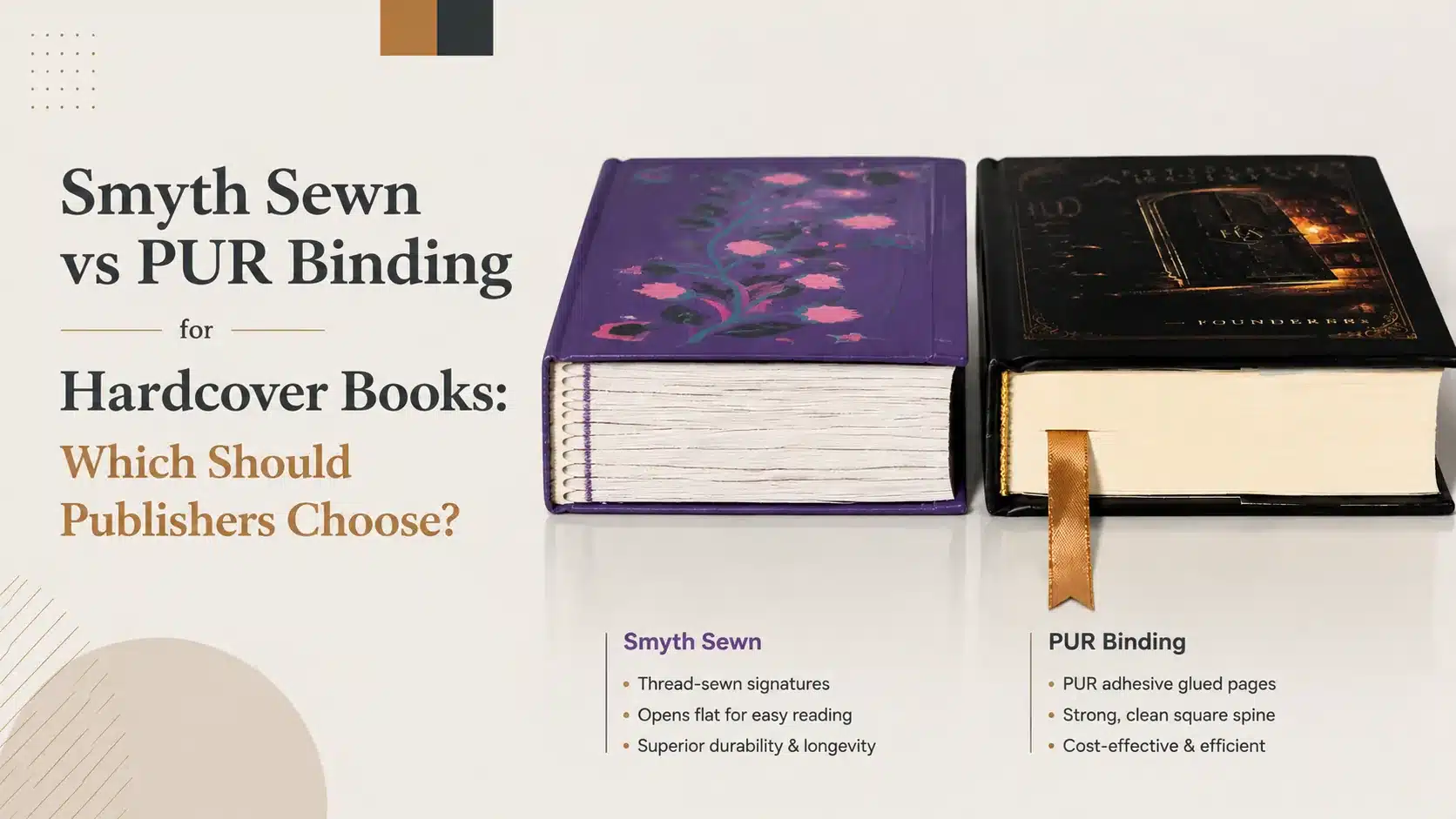
Two hardcover books can look almost identical when closed and behave very differently when opened.
One may be made from folded signatures sewn together with thread before casing-in. The other may use individual leaves secured primarily with polyurethane reactive adhesive. Both can have rigid boards, endpapers, headbands, a cloth or printed cover and excellent shelf presentation. The meaningful difference is inside the book block.
That distinction affects opening behavior, gutter visibility, page retention, paper choice, production planning and cost. It also explains why two quotations labeled simply “case bound hardcover” may not describe the same product.
For publishers, museums, galleries, independent authors and brand teams comparing Smyth sewn vs PUR binding, the correct choice is not always the more expensive one. It is the structure that fits the book’s content, paper, expected use, print quantity and commercial position.
This guide explains how each method works, where the practical differences appear and what to ask before approving a custom hardcover book printing quotation.
Table of Contents
The Short Answer
Choose Smyth sewn binding when the book needs repeated use, stronger page retention, more comfortable opening, demanding crossovers or a premium construction buyers will value. It is especially relevant to art books, photography books, reference books, collector editions, premium novels and thicker round-spine hardcovers.
Choose PUR adhesive binding when the project needs an efficient hardcover structure, the opening requirement is moderate and the additional sewing operation would not create enough commercial or functional value. PUR can be a sensible choice for many standard trade books, corporate books, short production runs and price-sensitive editions.
| Decision point | Smyth sewn book block | PUR adhesive-bound book block |
|---|---|---|
| Primary page-retention method | Thread through folded signatures | Reactive polyurethane adhesive at the prepared spine |
| Opening behavior | Generally opens more comfortably | Generally offers more resistance at the gutter |
| Page format | Folded signatures | Commonly individual leaves after spine preparation |
| Best fit | Premium, frequently used or spread-sensitive books | Standard hardcovers where efficiency and budget lead |
| Setup and production | More folding, gathering and sewing operations | Fewer binding operations in a typical adhesive workflow |
| Key planning issue | Signature imposition and paper grain | Spine preparation, adhesive application and curing |
This comparison is about the primary structure holding the pages. It is not a claim that a sewn book contains no glue.
What These Binding Terms Actually Mean
Case binding describes the cover, not the page attachment
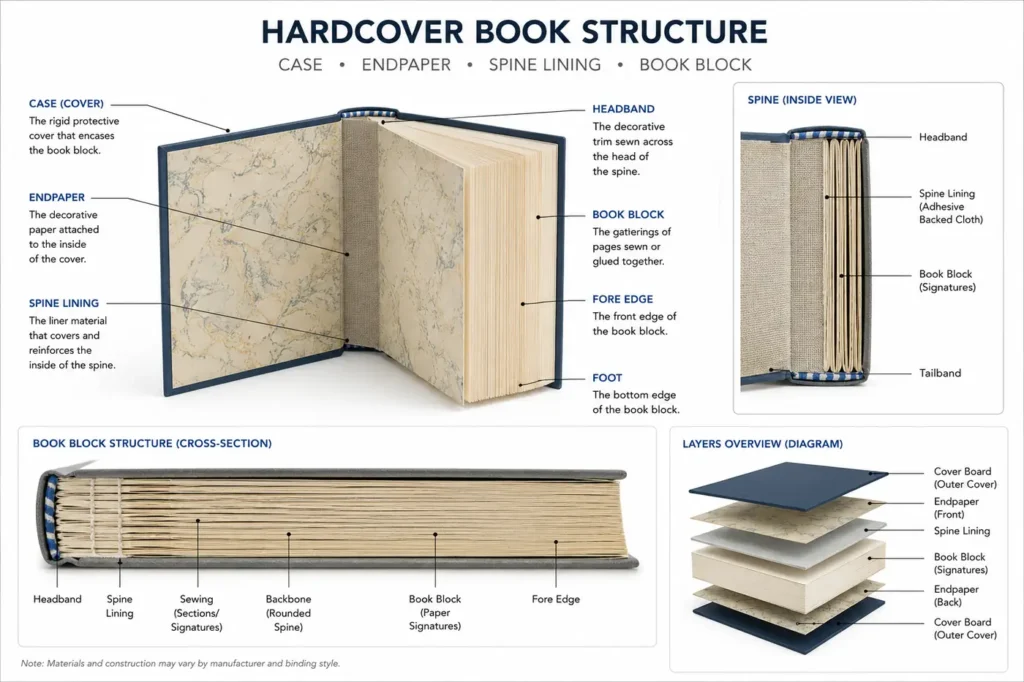
A casebound or hardcover book has a separately made rigid case attached to the book block through endpapers and spine materials. The cover may be wrapped in printed paper, book cloth, linen, leatherette or another suitable material.
“Case bound” does not tell the buyer whether the book block is sewn or adhesive bound. A complete specification should state both:
- Cover structure: case bound hardcover
- Book-block structure: Smyth sewn, sewn-glued, PUR adhesive bound or another agreed method
How Smyth sewn binding works
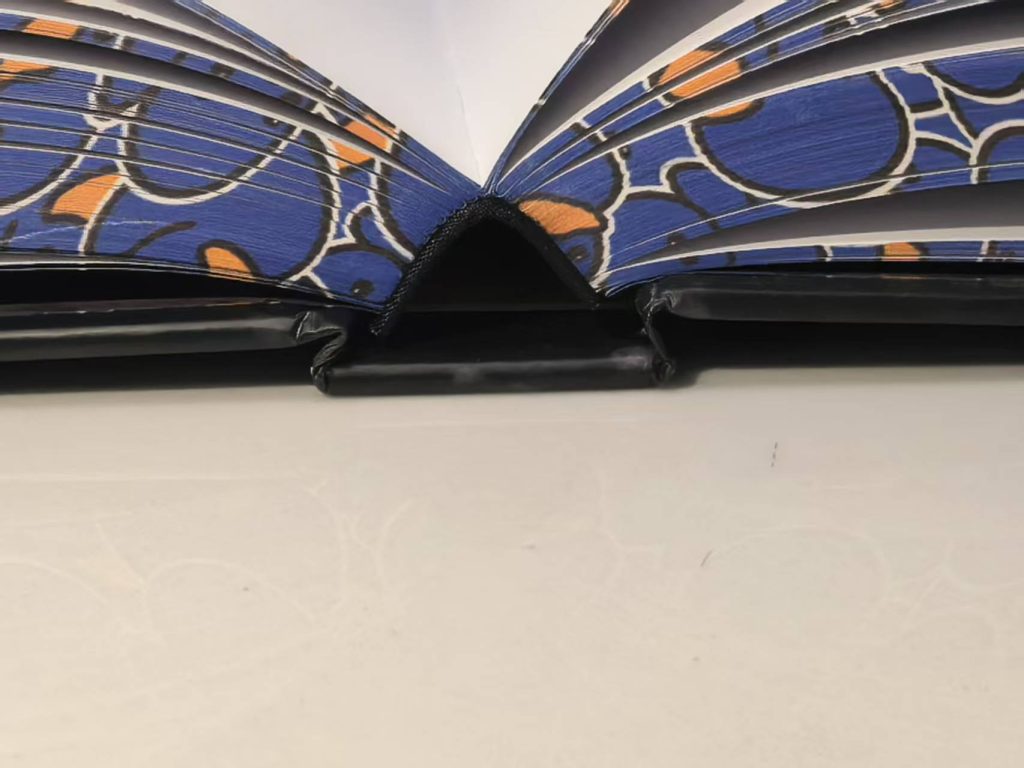
Printed sheets are folded into groups of pages called signatures or sections. The signatures are gathered in order and sewn through their folds. The assembled book block then receives adhesive and spine-lining materials before trimming and casing-in.
BindTech’s 2025 Smyth-sewn hardcover guidelines illustrate how technical the process becomes: signature configuration, trim allowance, ink-free bonding areas, paper grain, endpapers and minimum book bulk all influence manufacturing.
Smyth sewing therefore does not eliminate adhesive. Glue and lining stabilize the sewn book block and help connect it to the case. If a reader sees glue at the spine, that alone does not prove the book is adhesive-only.
How PUR binding works
In a PUR adhesive-bound book block, the folded spine edges are commonly milled or otherwise prepared so the adhesive can bond to the exposed paper fibers. Polyurethane reactive hot melt then forms the primary page-retention layer.
PUR is not simply another name for basic hot-melt glue. Henkel’s technical overview describes PUR hot-melt systems as moisture-reactive adhesives that develop stronger bonds as curing completes and notes their flexibility and suitability for bookbinding. Exact performance still depends on the adhesive formulation, spine preparation, application control, paper and curing conditions.
What “sewn-glued” may mean
Printers do not always use terminology consistently. “Sewn-glued” usually indicates that the signatures are sewn and the spine is then glued and lined, which is normal for many sewn hardcovers. In another quotation, it may describe a different hybrid method.
Never approve the term alone. Ask whether thread passes through the fold of each signature and request a photograph or physical sample of the untrimmed or open book block.
Seven Factors That Should Decide the Binding
1. How the book needs to open
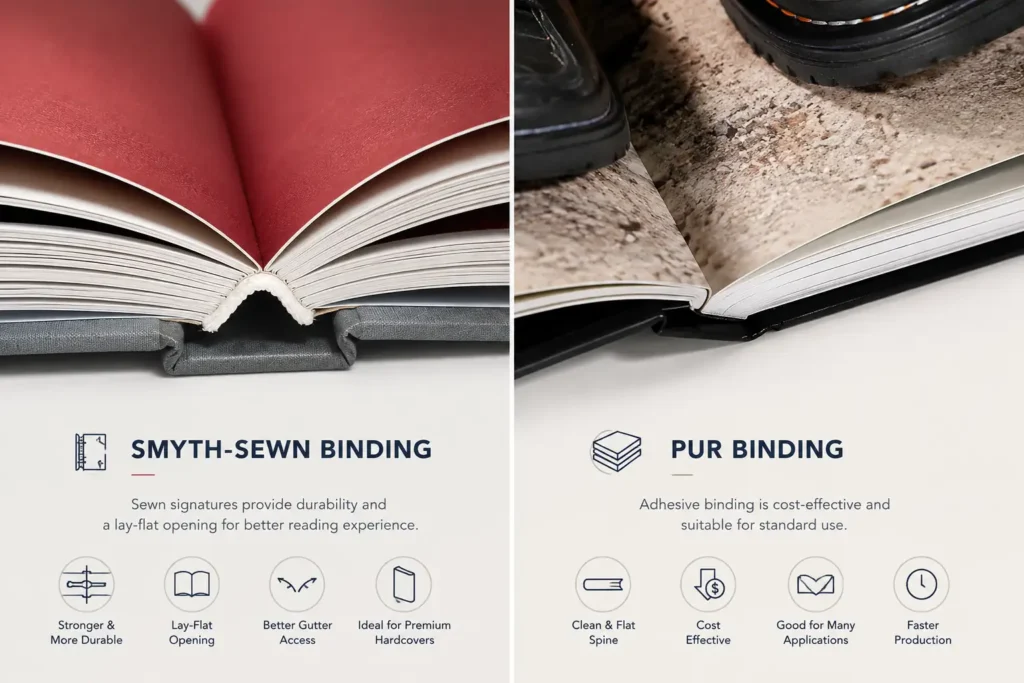
Smyth-sewn signatures flex at their folds, so the book normally opens more comfortably and exposes more of the inner margin. This is useful for:
- Two-page photographic spreads
- Maps, diagrams and artwork crossing the gutter
- Cookbooks or reference books consulted on a table
- Books handled repeatedly in museums, schools or libraries
- Premium editions where opening behavior is part of perceived quality
“Opens flatter” should not be confused with a guaranteed lay-flat book. Paper grain, signature thickness, spine lining, case construction and page count still affect behavior. If the brief requires pages to remain fully open without hand pressure, ask for a physical dummy and discuss a purpose-designed lay-flat structure.
2. Expected use and service life
A gift book opened a few times per year has a different structural requirement from a reference manual used every day. Thread distributes opening stress across signatures instead of asking the adhesive edge of each individual page to carry the full load.
That is why sewing is often specified for books expected to receive frequent handling or remain in use for years. As a real production example, Sheridan used Smyth-sewn binding for the 17th edition of The Chicago Manual of Style, describing the choice as part of a construction intended for a long shelf life. This is a relevant use case, not proof that every reference book must be sewn.
3. Interior paper and surface characteristics
Paper weight alone does not decide the binding. Grain direction, stiffness, coating, fold strength, ink coverage and the number of pages per signature also matter.
Heavy coated paper can create bulky, stiff signatures. Very heavy stock may crack at the fold or resist comfortable opening if the signature plan is unsuitable. With adhesive binding, coated or difficult-to-bond stocks demand correct milling, notching and adhesive selection.
For image-led projects, the binding decision should be made together with paper and color requirements. PrintPack360’s custom hardcover art book printing page brings these variables together for museum publications, photography books, gallery catalogs and premium brand books.
4. Page count and signature planning
Smyth sewing requires folded signatures. Page count, press-sheet imposition and paper thickness determine how those signatures are built. A book cannot always be divided into identical 16-page sections; shorter signatures or tipped components may need special placement.
This creates several planning questions:
- Can the final page count be imposed efficiently?
- Are there gatefolds, tip-ins or short sections?
- Will thick paper make each signature too bulky?
- Do solid ink or coatings interfere with bonding areas?
- Is the first or last section structurally suitable?
Late page-count changes can alter the signature plan, spine width, cover file and price. Finish the editorial extent before approving the hardcover template whenever possible.
5. Budget and quantity
Smyth sewing adds folding, gathering, sewing, setup and inspection. Those operations usually make it more expensive than a comparable adhesive book block. The difference is not a fixed percentage: format, page count, paper, quantity, equipment and location all affect the crossover.
PUR binding can reduce manufacturing complexity where sewing is not essential. That saving may be better invested in color proofing, paper, anti-scuff cover protection or export packing, depending on the project’s main risk.
Compare the total delivered cost rather than one unit-price line. The hardcover book printing cost guide explains how proofing, tooling, packing and freight change the real cost per accepted copy.
6. Product position and buyer expectations
Binding can be invisible in an online thumbnail, but readers notice it when they handle the book. For a numbered collector edition, museum monograph or premium direct-to-consumer release, sewn construction may support the product promise.
For a standard corporate publication with modest use, the same spend may not produce a measurable return. Do not specify Smyth sewing only because it sounds premium; specify it when durability, opening or edition positioning benefits.
7. Spine shape and book bulk
Square-back books can use either sewn or adhesive book blocks, subject to the full specification. Rounded-back hardcovers create another decision. The book block must tolerate rounding and backing without losing stability.
For thicker traditional editions, custom round-spine hardcover book printing commonly pairs a rounded spine with Smyth-sewn sections. Thin books may be more stable and economical as square-back hardcovers rather than being forced into a rounded form.
Binding Decision Matrix by Project Type
| Project | Usually stronger starting point | Reason to verify before approval |
|---|---|---|
| Full-color art or photography book | Smyth sewn | Heavy coated paper and crossovers need a tested signature and opening plan |
| Premium novel or collector edition | Smyth sewn | Supports repeated reading and premium positioning; confirm paper bulk and quantity |
| Standard trade hardcover novel | PUR or Smyth sewn | Decide from budget, expected use, run size and edition strategy |
| Corporate anniversary book | Either | Sewing may add value for a ceremonial edition; PUR may be sufficient for limited handling |
| Academic or technical reference | Smyth sewn | Frequent use and gutter access often matter |
| Children’s picture book | Project-specific | Page construction, safety scope, durability and target age may outweigh the simple sewn/PUR choice |
| Short-run market test | Often PUR or digital case binding | Inventory risk and setup cost may lead; confirm available paper and finishing |
| Thick round-spine hardcover | Usually Smyth sewn | Rounding, grain direction, spine lining and book bulk must be engineered together |
This matrix is a briefing tool, not an automatic specification. A 96-page art book on heavy stock may be structurally more demanding than a 320-page novel on lightweight paper.
Technical Details Buyers Commonly Overlook
Paper grain should run parallel to the spine
Correct grain direction helps pages fold and turn with less resistance and reduces stress in the book block. Cross-grain paper can make even a sewn book reluctant to open and may contribute to waviness or distortion.
Signature thickness affects opening and swell
More pages per signature can improve production efficiency, but thick sections create greater fold buildup. Fewer pages per signature may open better on heavy stock but increase the number of sections and sewing work. The printer should choose the imposition after paper is confirmed.
Sewing creates spine swell
Thread and folded sections make the spine thicker than the fore edge. Controlled swell can support rounding and backing, but too much complicates casing-in. Thread, paper, signature count, compression and lining must be balanced.
Endpapers are structural components
Endpapers connect the book block to the case. Their grain, thickness, printing and ink-free bonding areas affect attachment. Treating them only as decorative spreads invites manufacturing problems.
Crossovers still need safe design
Smyth sewing improves opening but does not erase the gutter. Faces, small type and critical geometry should not be split through the bound edge. Ask for the printer’s recommended inner safety margin and review representative spreads in a bound sample.
Cover files depend on the final book block
Spine width cannot be finalized from page count alone. Paper caliper, compression, sewing, lining, endpapers and spine shape all contribute. Export the case wrap, cloth stamping position, dust jacket and slipcase only after the physical structure is confirmed.
For a tactile edition that combines sewing with cloth, foil, debossing and a belly band, review the specifications on PrintPack360’s cloth-bound Smyth-sewn hardcover book page.
Problems a Clear Binding Specification Helps Prevent
Comparing non-equivalent quotations
One supplier may quote adhesive case binding while another includes Smyth sewing. If the book-block structure is not itemized, the cheaper quotation may simply describe a different product.
Assuming a hardcover is automatically sewn
A rigid case says nothing about the internal attachment method. State the binding explicitly in purchase orders, approved samples and inspection criteria.
Choosing sewing without a viable signature plan
Final pages added late, isolated color sections, thick stock or misplaced short signatures can increase cost and production risk. Ask for the proposed signature breakdown before printing.
Treating PUR as low quality by definition
PUR is a capable modern adhesive system when properly specified and controlled. A well-made PUR hardcover can be more appropriate than a poorly engineered sewn book. The real comparison is between complete, manufacturable specifications.
Promising “lay-flat” without a test
Opening behavior is a system result. Binding, paper grain, stock stiffness, format, spine lining and case geometry all contribute. Use a physical sample as the approval reference.
Approving the cover before the text stock
Changing paper or page count changes book bulk and may invalidate the spine, hinge and slipcase dimensions. Lock the interior structure first.
What to Check in a Binding Sample

A PDF proof can confirm page sequence and artwork. It cannot confirm binding behavior. For projects where structure matters, PrintPack360’s sample strategy can help separate a digital proof, blank dummy, material test and finished sample.
Review the physical sample for:
- Correct trim size, page count and sequence
- Visible signatures and sewing consistent with the approved method
- Secure pages at the first and last sections
- Endpaper attachment without lifting or excessive wrinkling
- Comfortable, even opening through the front, middle and back
- Acceptable gutter visibility on representative spreads
- No cracking at coated folds
- Stable spine with no unexpected gaps or glue squeeze
- Square case alignment and even hinge movement
- Correct spine width, headbands and ribbon placement
- Cover, jacket or slipcase fit after the book has conditioned
Do not test only the center spread, where many books open most easily. Compare several openings near the front and back. Open pages normally; do not force the spine beyond its intended movement and then judge the damaged sample.
For bulk inspection, retain the signed sample and define observable criteria. “Smyth sewn as approved sample” is clearer than “premium binding.”
How to Request Comparable Binding Quotes
Send one specification and ask suppliers to price the same alternatives.
| Quote item | Base option | Alternative option |
|---|---|---|
| Cover structure | Casebound hardcover | Same |
| Book-block binding | PUR adhesive bound | Smyth sewn and spine reinforced |
| Finished size and pages | Fixed | Same |
| Interior paper | Fixed stock, GSM and finish | Same |
| Printing | Fixed colors and coverage | Same |
| Endpapers | Fixed paper and printing | Same |
| Cover and finishing | Fixed | Same |
| Proof | Defined physical sample | Same approval scope |
| Packing and delivery | Defined trade term and destination | Same |
Also provide:
- Book type and intended use
- Quantity and useful quantity breaks
- Final or estimated page count
- Representative interior PDF
- Heavy ink coverage, coatings, gatefolds or tip-ins
- Required opening behavior and crossover pages
- Square or round spine preference
- Cover wrap, board, jacket and special finishing
- Target retail price or cost ceiling, if commercially useful
- Delivery city, country and deadline
Ask the printer to return:
- Recommended binding and reason
- Proposed signature plan for the sewn option
- Paper-grain requirement
- Estimated book bulk and spine width after material confirmation
- Proofing method
- Production tolerance and inspection points
- Unit and total price for each binding option
- Packing, freight scope and trade term
The goal is not to persuade every buyer to choose sewing. It is to make the tradeoff visible. When opening, durability and premium positioning matter, Smyth sewing can be a structural investment. When those benefits are secondary, a well-controlled PUR casebound book may be the more disciplined decision.
A Practical Recommendation
Use three questions before deciding:
- Will the reader notice the difference in use? Consider spreads, gutter access and handling frequency.
- Will the market value the difference? Consider edition positioning, retail price and customer expectations.
- Can the specification support the difference? Confirm paper grain, signature plan, page count, quantity, sampling and budget.
If the answer is yes to all three, Smyth sewing is usually worth serious consideration. If only the word “premium” supports the decision, compare a PUR-bound sample before committing the budget.
For projects requiring cloth, foil stamping and stronger opening behavior, the custom cloth-bound hardcover book is the most directly related production example. For image-heavy work, start with the casebound art book printing specification and confirm the paper before choosing the signature plan.
Frequently Asked Questions
Is Smyth sewn binding the same as case binding?
No. Case binding describes the rigid hardcover construction. Smyth sewing describes how folded signatures in the book block are joined. A casebound book may use a Smyth-sewn or adhesive-bound book block.
Is a Smyth-sewn hardcover completely glue-free?
No. The signatures are held together by thread, but adhesive and spine-lining materials are normally used to stabilize the block and attach it within the case. The distinction is that thread provides primary mechanical page retention.
Is PUR binding suitable for hardcover books?
Yes. PUR adhesive binding can be used for many hardcover projects. Suitability depends on paper, page count, opening requirements, expected handling, production method and quality control.
Does Smyth sewn binding lie completely flat?
It usually opens more comfortably than adhesive-only binding, but it should not automatically be sold as fully lay-flat. Paper grain, signature thickness, spine treatment and case construction also affect the result.
Is Smyth sewing always more durable than PUR binding?
Sewn signatures generally provide stronger mechanical page retention for repeated use. Actual durability still depends on paper, folding, thread, sewing, adhesive, lining, casing-in and handling. Compare complete constructions, not one label.
Which binding is better for a hardcover art book?
Smyth sewing is often preferred for image-heavy art books because it supports repeated handling and better opening. Heavy paper and crossover artwork still require a suitable signature plan and physical sample.
Which binding is better for a premium novel?
Smyth sewing supports premium positioning and repeated reading, especially for collector editions. PUR may suit a standard trade hardcover where cost and production efficiency matter more. Paper bulk, quantity and retail strategy should guide the choice.
Can a round-spine hardcover use PUR binding?
The feasibility depends on the book block and equipment, but thicker premium rounded-back books are commonly planned with sewn signatures because the block must tolerate rounding and backing. Confirm the structure with the manufacturer before artwork approval.
How can I verify that a sample is Smyth sewn?
Look at the center of a signature for thread passing through the fold, but do not rely only on casual inspection. Request the signature plan, production photographs or an untrimmed book-block sample and state the approved binding in the purchase order.