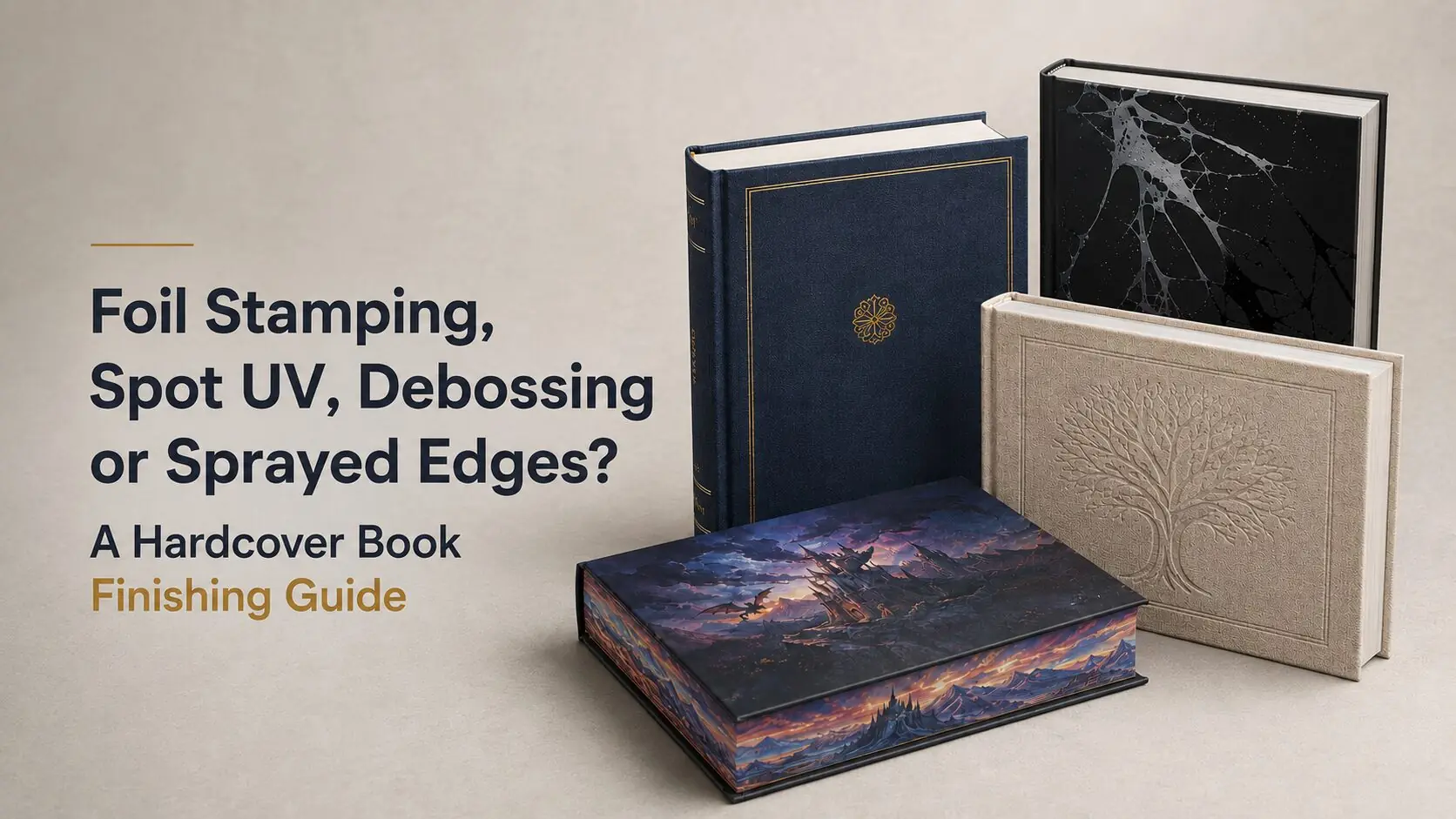
Special finishes are no longer confined to museum catalogues and fine press editions. They now appear on romance and fantasy hardcovers, author-direct releases, subscription-box editions, art books, anniversary publications and premium brand books.
The commercial signal is real. Circana BookScan data reported by Publishers Weekly shows that US print book sales reached 762.4 million units in 2025. The special Wing and Claw edition of Onyx Storm sold almost 1.7 million copies during the year, while the standard edition sold 573,192. This is not a controlled test of finishing alone: format, availability, fandom and marketing all contributed. It does show, however, that edition design can be part of the product strategy rather than a decorative afterthought.
The production question is not, “Which finish looks most premium?” It is:
Which finish creates a visible reason to choose this edition, while remaining compatible with the material, artwork, retail price and delivery conditions?
This guide compares four widely requested hardcover book finishing options: foil stamping, spot UV, debossing and decorated page edges. It also explains when to combine them, what can go wrong and what a printer needs before giving a reliable quotation.
Terminology note: This article uses debossing to mean pressing artwork below the cover surface. It is different from rotogravure, an industrial intaglio printing process sometimes also translated as “gravure printing.”
Key of Contents
Quick Comparison: What Each Finish Actually Does
| Finish | Main visual effect | Best suited to | Main production risk |
|---|---|---|---|
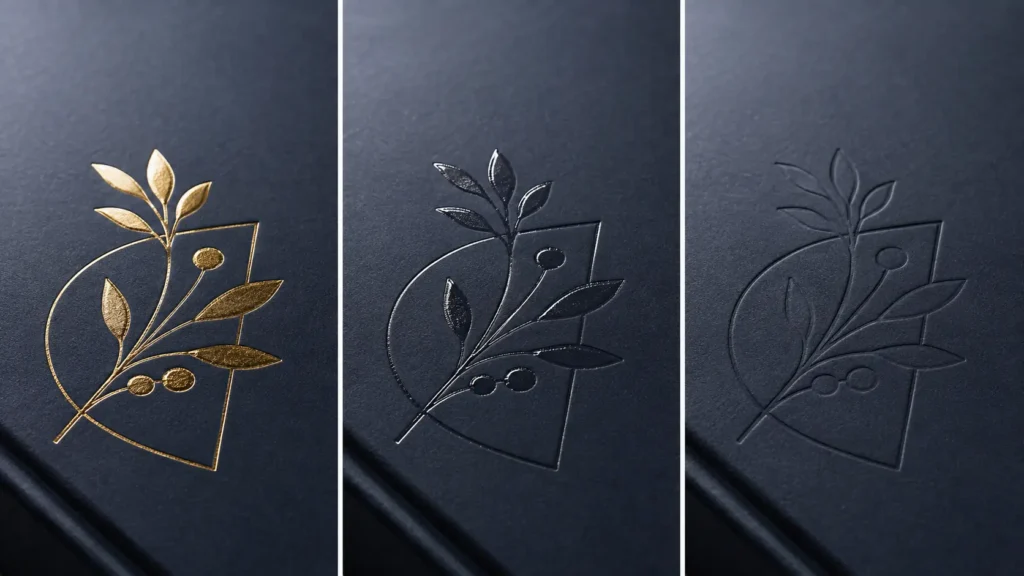
| Foil stamping | Metallic, pigmented or holographic reflective detail | Titles, symbols, borders and limited-edition marks | Broken detail, poor release or weak adhesion on textured materials |
| Spot UV | Clear gloss or raised clear contrast over selected areas | Printed paper cases and dust jackets with controlled matte/gloss contrast | Weak visual contrast, registration shift or cracking near folds |
| Debossing | Recessed tactile impression | Cloth, paper wrap, PU and restrained typographic covers | Shallow result, board show-through or distortion from excessive depth |
| Sprayed or digitally printed edges | Solid color, gradient, pattern or image across the closed book block | Romance, fantasy, collector editions and visually led series | Chipping, color variation, page curl or artwork loss after trimming |
No finish is automatically superior. A restrained blind deboss on linen can feel more convincing than three effects competing on the same cover. Conversely, a highly visual fantasy edition may justify foil, case art, illustrated edges and printed endpapers because the whole object is designed as a collectible system.
Why Special-Edition Finishing Has Become a Buyer Priority
Decorated edges are the clearest recent example. In July 2025, The Washington Post reported that a major North American book manufacturer was producing millions of books annually with specialized edge designs and had quadrupled its capacity after installing new equipment. The article also traced demand from subscription boxes and self-published authors into mainstream retail, extending beyond romance and fantasy into horror, thrillers and literary fiction.
That growth creates opportunity, but it also raises the standard. Once many new releases have sprayed edges, the presence of an effect is no longer enough. Buyers need a finish that:
- Fits the genre and audience rather than following a trend mechanically
- Is legible in product photography and short-form video
- Gives retailers or subscribers a clear edition distinction
- Survives packing, freight, warehousing and repeated handling
- Supports a realistic retail price and print quantity
- Can be repeated consistently across reprints or a series
For publishers and independent authors, finishing should therefore be discussed at concept stage, before the cover layout, spine width and launch budget are locked.
1. Foil Stamping: Best When Light and Contrast Matter
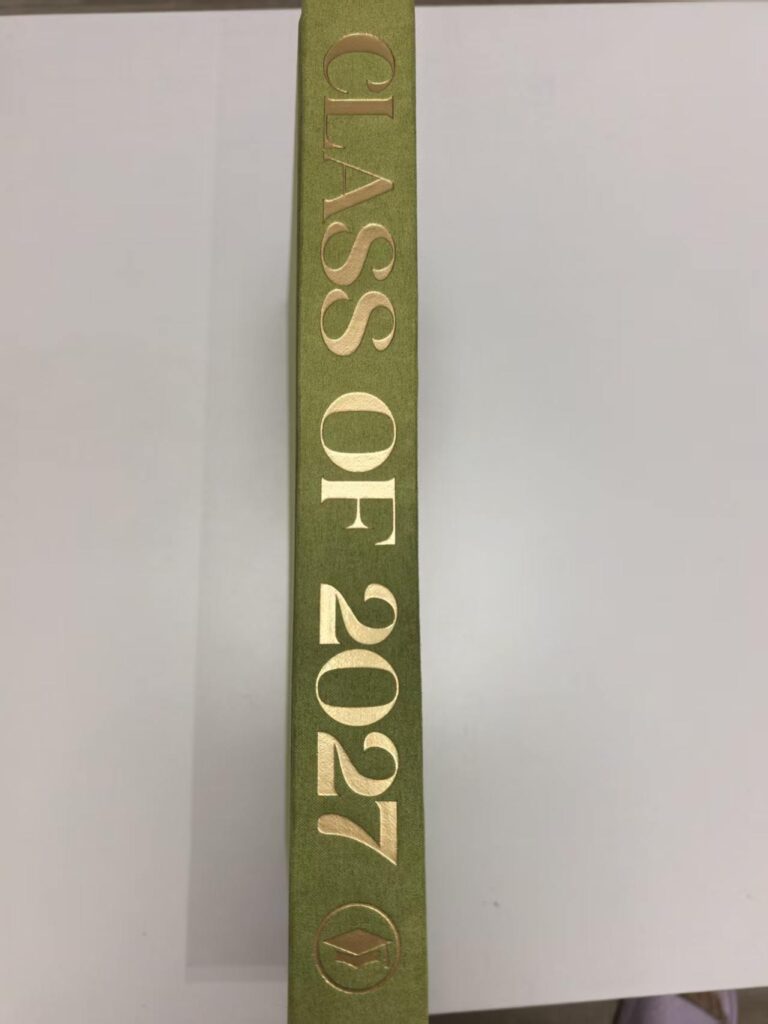
Foil stamping transfers a foil layer to the cover using a heated die and pressure. Gold and silver remain common, but matte metallic, colored, pearl, clear and holographic foils can create very different results.
Foil is effective when the design needs a controlled point of reflected light: a title, emblem, constellation, frame or edition number. It often photographs well and remains visible under changing viewing angles, which helps special editions stand apart in online listings and social content.
Where foil works well
- Smooth printed paper cases with matte or anti-scuff lamination
- Suitable book cloth tested for release and adhesion
- Dust jackets, belly bands and slipcases
- Medium-weight typography and simplified line art
- Covers where the foil has clear contrast with the base material
Where foil becomes difficult
Fine lines and small counters can fill or break. Rough cloth can interrupt a thin rule. Large solid foil areas may reveal pressure or coverage variation. Artwork placed too close to a hinge, joint or wrap edge can distort during case making.
For cloth projects, the material should be tested rather than approved from a screen. PrintPack360’s cloth-bound Smyth-sewn hardcover book shows how foil, debossing, a belly band and printed endpapers can be coordinated within one casebound structure. The lesson is not to add all four by default, but to confirm that cloth weave, foil type, die detail and impression pressure work together.
2. Spot UV: Contrast Without Adding Another Printed Color
Spot UV is a clear coating applied to selected artwork and cured with ultraviolet light. Standard spot UV creates gloss contrast; raised UV adds a more pronounced tactile layer.
It is strongest on a smooth, printed surface, especially when gloss UV sits over matte lamination. A dark pattern, water surface, logo or typographic detail can appear only as the book moves in the light. That controlled reveal can feel sophisticated without introducing metallic foil.
Spot UV is usually less suitable directly on open-weave cloth, highly absorbent stock or unstable textured surfaces. The coating needs a predictable base. It must also be kept away from score lines, wrap edges and areas likely to crack or receive heavy abrasion.
Choose spot UV when:
- The cover already carries full-color artwork
- You want tone-on-tone contrast rather than a metallic accent
- The design contains medium or broad shapes that can tolerate registration limits
- The book will use a smooth laminated paper case or dust jacket
Do not rely on spot UV when:
- The important effect must remain obvious under flat, diffuse lighting
- The cover material is too rough or absorbent
- The artwork depends on hairline registration
- The gloss area crosses hinges or folds
A screen mock-up cannot prove gloss level, coating height or reflection. A physical cover proof is much more useful for a book whose commercial identity depends on the effect.
3. Debossing: Tactile Structure for Cloth and Minimal Covers
Debossing presses artwork into the cover surface. Blind debossing uses no foil or ink; foil debossing combines a recessed impression with transferred foil. Embossing does the opposite by raising the artwork, typically with matched dies.
Debossing works especially well for restrained titles, logos, symbols and framing devices. It can give a cloth-bound or uncoated cover a sense of permanence without making the surface overly reflective. Because touch is central to the effect, it is often valuable for limited editions, poetry, architecture, photography, brand histories and commemorative books.
Depth is not a free variable. The result depends on:
- Cover material thickness and elasticity
- Board density and thickness
- Artwork size and line weight
- Die construction
- Heat, pressure and dwell time
- Whether foil is applied in the same or a separate pass
An excessively deep impression can crush cloth texture, expose the board shape or deform nearby elements. Very fine artwork may disappear into a coarse weave. The correct instruction is not simply “deep deboss”; it is an approved physical reference showing acceptable depth, edge definition and material behavior.
4. Sprayed, Stenciled and Digitally Printed Edges
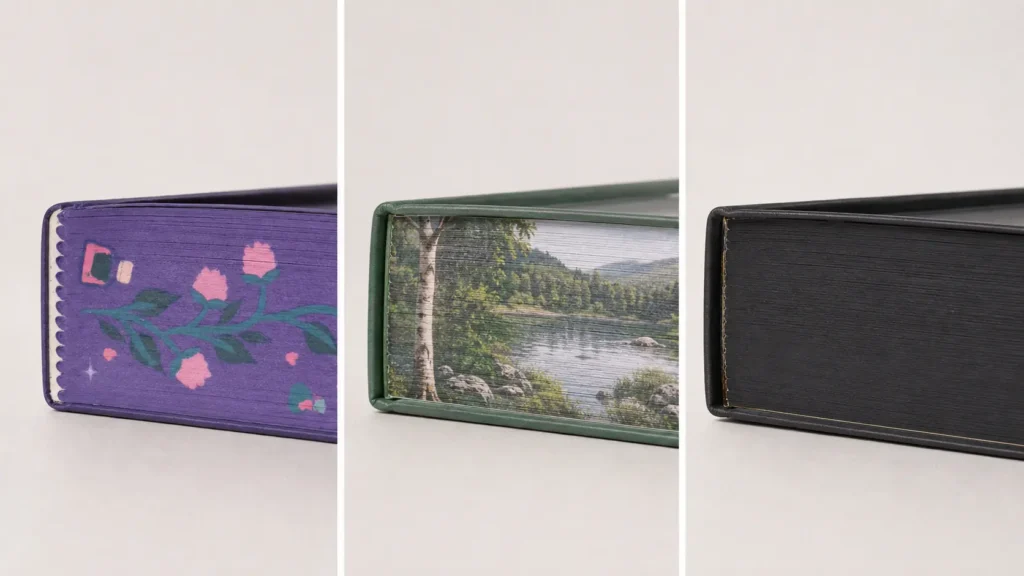
The page edge becomes visible when a closed book is displayed pages-out, stacked or filmed from an angle. A solid sprayed edge can reinforce a cover color. A gradient can connect a series. A digitally printed edge can carry a pattern, landscape, character motif or continuous illustration.
The effect has become particularly relevant to romance, romantasy and fantasy editions, but it should still perform a product role. It may identify a subscriber-exclusive edition, distinguish a first printing, complete a box set or give an author-direct release a feature unavailable in the standard retail version.
Friesens’ 2025 production guidance notes several practical limits: digitally printed edges use CMYK rather than Pantone, color appears softer on uncoated paper, rounded corners and ragged fore-edges need review, and some variation can occur. The company also uses both online proofs and dummy books because a flat image does not fully predict the finished edge.
Solid sprayed edges
Use these when color consistency and a clean block of color matter more than illustration. They are often the most controlled entry point for a first special edition.
Stenciled edges
A stencil can create repeating motifs or restrained patterns. Registration and density should be tested, particularly on thick book blocks or designs that need alignment across head, foot and fore-edge.
Digitally printed edges
These allow more detailed CMYK artwork, but the image must account for trimming, page compression, paper texture and the fact that the book edge is not a flat coated sheet. Fine text and critical facial details are poor choices.
For a practical production reference, see PrintPack360’s custom hardcover book printing with sprayed edges and embossed spine details. Its combination of edge decoration, cover finishing and case binding illustrates why the book should be approved as one object, not as separate artwork files.
How to Choose the Right Finish for the Edition
| Project goal | Recommended direction | Why |
|---|---|---|
| Premium literary or poetry edition | Cloth plus blind deboss or restrained foil | Tactile, durable and visually quiet |
| Romance or fantasy collector edition | Foil plus coordinated sprayed/printed edges | Strong shelf and social-media recognition |
| Photography, art or architecture book | Matte printed case with spot UV or debossed title | Lets imagery lead while adding controlled material contrast |
| Corporate anniversary or brand book | Cloth, precise foil/deboss and printed endpapers | Supports brand consistency and ceremonial presentation |
| Subscription-box exclusive | Distinct edge design plus one cover differentiator | Makes the edition identifiable without redesigning every component |
| Numbered high-value set | Foil or debossed case with fitted slipcase | Adds hierarchy, protection and gifting value |
For art-led projects, compare the finishing plan with the broader art book printing specification. For fiction programs, the novel printing category provides a more relevant starting point for trim size, binding and quantity decisions.
Combining Finishes Without Overdesigning the Book
A successful special edition usually has a hierarchy:
- Primary signal: the feature visible first, such as foil title or illustrated edge.
- Secondary tactile detail: debossing, spot UV or cloth texture discovered on handling.
- Supporting system: endpapers, ribbon, headbands, belly band, dust jacket or slipcase.
When every surface competes, the edition can become expensive without becoming more coherent. One practical method is to assign each finish a job. Foil carries the title, debossing creates background texture, the edge carries the narrative motif, and the endpaper supplies color. Avoid placing multiple effects on the same small detail unless the registration tolerance and commercial value justify it.
A custom book jacket and slipcase set can be a better investment than adding another cover process when protection, gifting and shelf presentation are the main goals.
Production Risks Buyers Should Resolve Before Approval


Material and finish incompatibility
Foil may not release cleanly on a coarse cloth. UV may not anchor predictably to an unsuitable coating. Debossing may look shallow on a dense wrap. Request a material swatch or process test using the intended substrate.
Registration between effects
Foil over print, UV over typography and foil combined with embossing require registration tolerances. Build artwork that remains attractive within the printer’s stated tolerance rather than designing two hairlines that must align perfectly.
Edge chipping and transfer
Edge decoration can chip under abrasion or transfer if drying and packing are inadequate. Paper, ink system, coverage, block preparation and handling all matter. The approved sample should be checked after repeated opening, rubbing and packing, not only when it first leaves the machine.
Color expectations
Metallic foil is judged by physical swatch, not CMYK values. Spot UV is clear and depends on the base print. Edge color on uncoated pages can appear softer than the cover. Define separate approval references for each process.
Damage in transit
Foil scuffing, crushed corners and chipped edges may appear after production if books move inside cartons. Individual wrapping, sensible carton weight, dividers, corner protection and fitted packaging should be included in the quality plan.
Artwork and File Requirements
Supply the interior, cover and special finishes as clearly separated production elements.
- Use print-ready PDF files in CMYK with embedded or outlined fonts.
- Confirm final trim size, page count, paper and spine width before exporting the cover.
- Add bleed and wrap areas according to the printer’s hardcover template.
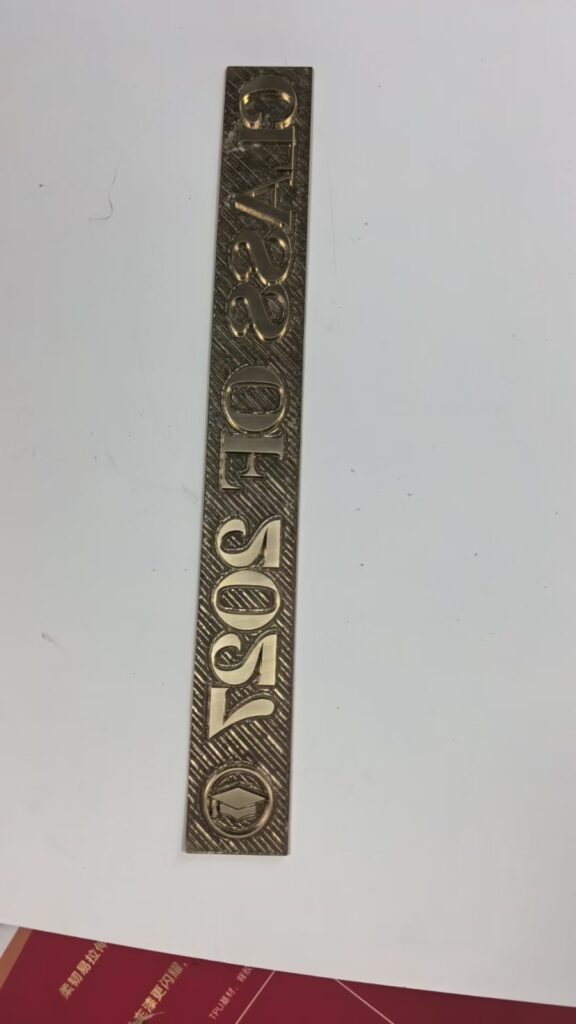
- Supply foil, spot UV, embossing and debossing as separate vector layers or separate one-color PDFs.
- Use 100% solid spot colors to identify finishing areas; do not use gradients unless the process specifically supports them.
- Name every layer by process, such as
GOLD_FOIL,SPOT_UVorDEBOSS. - Keep critical finishing away from hinges, joints, board edges, folds and trim risk zones.
- Supply page-edge artwork using the printer’s dedicated template and orientation guide.
- Include a visual composite showing the intended relationship between print and finishing.
Do not assume that artwork described as “print-ready” is automatically production-ready for special finishing. The die line weight, reversed text, trapping, edge orientation and final case dimensions still need process-specific review.
Proofing and Quality Control: What to Approve
A useful approval sequence separates questions instead of expecting one proof to answer everything.
1. Digital content proof
Confirm pagination, text, image placement, finish-layer position and orientation. This is not a material or color approval.
2. Material and finish test
Confirm cloth or paper, foil shade, adhesion, UV contrast, deboss depth and edge color behavior. A process-specific test can be more informative than a fully handmade book using substitute methods.
3. Bound sample or production sample
Confirm spine, joint, opening, case alignment, edge appearance, endpapers and how all finishes work together. Also test the slipcase or jacket fit if included.
4. Bulk-production inspection
Define acceptable variation and inspect registration, foil coverage, impression depth, coating defects, edge contamination, binding, rubbing, packing and quantity. Retain an approved sample for comparison.
For special finishes, “looks premium” is not an inspection criterion. Convert the expectation into observable points: no missing foil on the title, no UV crossing the specified boundary, deboss depth consistent with the approved sample, clean page faces, and edge artwork oriented correctly.
What Drives the Cost of Premium Finishing?
The main cost factors are not limited to the visible material. They include:
- Die, plate, screen or digital setup
- Number of foil colors and separate passes
- Artwork area and detail
- Cover material and pretreatment
- Quantity and setup waste
- Manual handling between processes
- Edge type: solid, stenciled or full-color digital
- Physical sampling and repeat tests
- Inspection standard and packing method
- Rework risk when several effects must register
Request each finish as a separately priced option. A good quotation might compare:
- Base hardcover only
- Base plus one hero finish
- Base plus the preferred combined finish package
- Preferred package with slipcase or gift packaging
Information to Send for an Accurate Quote
- Book type, genre and target market
- Finished size, page count and quantity breaks
- Interior printing and paper
- Binding method and opening requirement
- Cover board and wrap material
- Dust jacket, belly band, endpapers, ribbon and headbands
- Exact foil color and foil area
- Spot UV type and area
- Embossing or debossing artwork and desired effect
- Solid, stenciled or digitally printed edge requirement
- Slipcase or presentation box
- Proofing expectation
- Packing method and carton-label requirements
- Delivery city, country, deadline and preferred trade term
- Reference photographs or physical samples
PrintPack360 coordinates book construction, cover materials, premium finishing, proofing, inspection and export packing for international B2B projects. Start with the custom hardcover book printing range, then send one base specification and the finish combinations you want priced.
Frequently Asked Questions
Is foil stamping better than spot UV for a hardcover book?
Neither is universally better. Foil adds opaque reflective color and can work on suitable cloth or paper. Spot UV adds clear gloss contrast and usually performs best on a smooth printed and laminated surface. Choose according to the substrate, artwork and viewing conditions.
Can foil stamping and debossing be combined?
Yes. Foil can sit within a recessed impression, but artwork, dies, material and registration must be planned together. A physical test is recommended, especially on textured cloth.
Is spot UV suitable for a cloth-bound book?
Usually not as the first choice on open or textured cloth because the coating needs a stable, predictable surface. Foil or blind debossing is often more suitable. Spot UV can instead be applied to a printed belly band, dust jacket or paper panel.
What is the difference between sprayed and digitally printed edges?
Sprayed edges generally apply a solid color, while digital edge printing can reproduce CMYK gradients, patterns or images. Terminology varies by supplier, so specify the intended visual result and request a relevant sample.
Will sprayed edges chip or bleed?
They can if the paper, ink, drying, block preparation, handling or packing is unsuitable. Some variation is normal. Approve a physical sample and define checks for page faces, rubbing, transfer and transit protection.
Do premium finishes increase production time?
Usually yes. Each finish may add file review, tooling, setup, drying or curing, handwork, inspection and sampling. Combined effects should be scheduled as a process sequence rather than treated as one operation.
What is the minimum artwork size for foil or debossing?
There is no universal minimum. It depends on the die, material, line direction, foil and equipment. Send vector artwork at final size and ask the printer to flag lines, gaps and reversed text that are too fine for reliable production.
Should every special edition have sprayed edges?
No. The edge should support the audience, genre, price and visual system. A cloth cover with one well-executed foil or deboss can be stronger than an unrelated edge effect added only because it is fashionable.